
Ryzen 5 7600 vs Core i7-14700K
The complete head-to-head: full specs, real 1080p gaming fps with 1% lows, productivity benchmarks, a live GPU-bottleneck check, power, platform cost and a straight verdict.
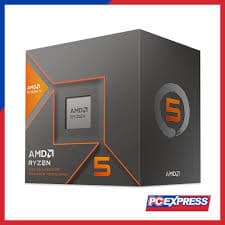
Ryzen 5 7600
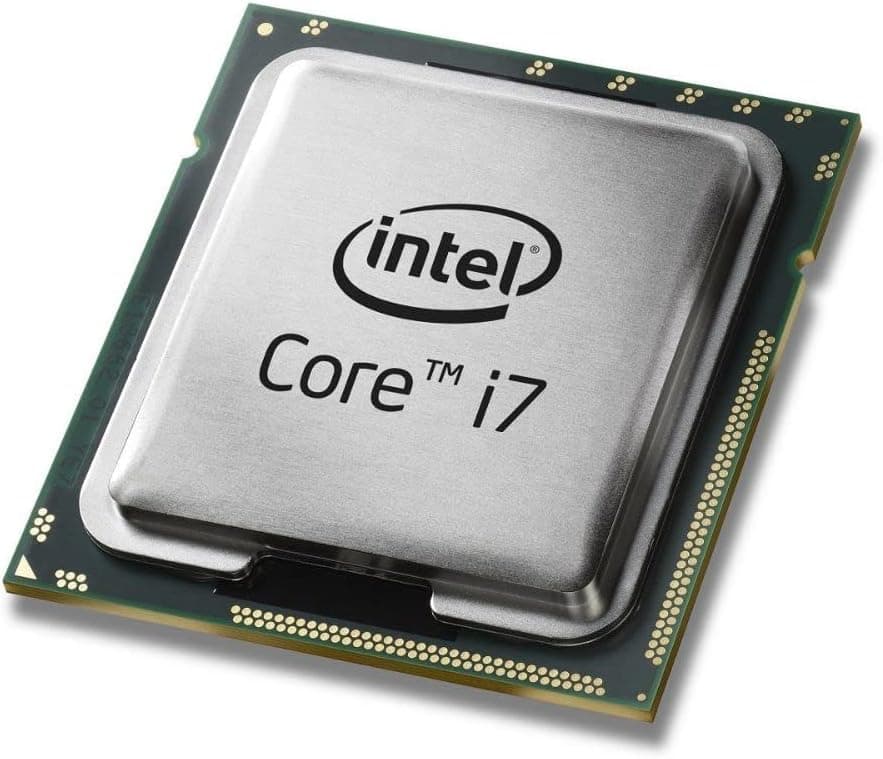
Core i7-14700K
gaming, 1080p
The short answer
Be honest about what this comparison is: a budget six-core chip against a premium 20-core flagship-adjacent chip that costs almost twice as much. The Core i7-14700K is about 31% faster in games and nearly three times faster in multi-core work, which is exactly what you would expect from a chip with more than triple the thread count. This is not a close race and shouldn't be treated like one. The real question most people asking this are actually facing is budget versus performance, not brand versus brand. If your budget is Ryzen 5 money, the 7600 is a genuinely good chip for that price and the 14700K isn't a realistic alternative. If your budget stretches to Core i7 money, don't stop at the 7600, compare the 14700K against AMD's own Ryzen 7 7700X instead, which is the fairer same-tier fight.
This matchup shows up in searches a lot, usually from someone comparing a budget build to a premium one rather than two chips at the same price. The Ryzen 5 7600 is AMD's entry-level six-core Zen 4 chip, built for value. The Core i7-14700K is a 20-core Raptor Lake Refresh chip a full tier and roughly 150 dollars higher, built for buyers who also render, compile, or stream heavily.
What follows is the full spec breakdown, 1080p gaming fps with 1% lows, productivity benchmarks, a GPU-bottleneck checker, power draw, platform cost, and a straight verdict, including where this comparison genuinely helps and where it's really a budget question in disguise.
At a glance
Six dimensions, two chips. Each owns different corners, bigger area is not automatically better.
Strengths radar
Each axis scored 0-100 relative to the pair
Gaming vs price
Up and to the left is better value
Grey dots are neighbouring chips for context.
Which should you buy?
Pick your use case, the winner changes with what you actually do.
The 7600 needs no extra cooler and a cheap board, the lowest total cost to a playable modern build.
Despite trailing badly in raw fps, the 7600's much lower price still wins on cost per gaming frame.
20 threads give the 14700K a massive edge encoding video alongside a game without dropping frames.
Nearly triple the multi-core throughput makes the 14700K the only real option here for production work.
65 W and a bundled cooler mean the 7600 stays cool and quiet without any extra spend on cooling.
If your budget already reaches the 14700K, don't shortlist the 7600 at all, compare it to the Ryzen 7 7700X instead.
This is a budget question, not a brand question.
Read this before you spend
If 7600 money is your actual budget, the 14700K simply isn't on the table, and that's fine, the 7600 plays modern games well and leaves plenty for a good GPU. Don't let a 31% number on a spec sheet talk you into overspending on a chip that costs nearly double.
If your budget genuinely reaches the 14700K, the fair comparison is against AMD's Ryzen 7 7700X, a same-tier eight-core chip at a closer price. Stretching from a 7600 straight to a 14700K skips a whole tier of better-matched options on both sides.
Full specification comparison
Every spec side by side. The highlighted figure wins each row.
| Specification | Ryzen 5 7600 | Core i7-14700K |
|---|---|---|
| Architecture | ||
| Architecture | Zen 4 | Raptor Lake Refresh |
| Process node | TSMC 5 nm ▲ | Intel 7 (10 nm class) |
| Release date | Jan 10, 2023 | Oct 17, 2023 |
| Launch MSRP | $229 ▲ | $409 |
| Cores & clocks | ||
| Cores / threads | 6 / 12 | 20 / 28 (8P+12E) ▲ |
| Base / boost clock | 3.8 / 5.1 GHz | 3.4 / 5.6 GHz ▲ |
| Overclocking | Locked | Unlocked ▲ |
| Cache & memory | ||
| Total cache | 38 MB | 61 MB ▲ |
| 3D V-Cache | None | None |
| Memory support | DDR5-5200 | DDR5-5600 ▲ |
| Platform & power | ||
| Socket | AM5 | LGA1700 |
| TDP / peak power | 65 W (88 W PPT) ▲ | 125 W (253 W PL2) |
| Integrated graphics | RDNA 2 (2 CU) | UHD Graphics 770 |
| Bundled cooler | Wraith Stealth ▲ | None |
Gaming FPS by game
Tested at 1080p with a top GPU so the processor is the limit. Switch resolution and metric, the bars update live.
Average FPS at 1080p, paired with a top-tier GPU so the processor is the limit. The gap between these two chips is widest at 1080p and shrinks as resolution rises and the GPU takes over.
Cache, clocks and 1% lows
Why the cache and clock balance decides the gaming feel
This gap is really about core count, not cache tricks, since neither chip runs 3D V-Cache. The 7600 is a simple six-core Zen 4 chip built to hit a low price point. The 14700K is a hybrid design with eight performance cores and twelve efficiency cores, 20 total, more than triple the 7600's thread count.
That's why the productivity gap is so much larger than the gaming gap. Games mostly use a handful of fast threads and don't scale cleanly past six to eight cores, so the 7600 stays reasonably close in frame rate. Rendering, compiling and encoding scale with thread count almost directly, which is where the 14700K's extra cores turn into a near three-times lead.
Productivity & content creation
Rendering, encoding and compiling lean on cores and threads more than games do, so the ranking can flip here.
Streaming and content work
For streaming while gaming, the 14700K's 20 threads make it the clear pick, with enough headroom for x264 software encoding and the game running at once without a hitch. The 7600's six cores are tight for that combination; a 7600 streamer is far better served leaning entirely on GPU-based NVENC or AV1 encoding, which barely touches the CPU.
Will these CPUs bottleneck your GPU?
A faster CPU only helps if your graphics card needs the frames. Pick your GPU and resolution to see expected fps and any bottleneck for each chip.
Will these CPUs bottleneck your GPU?
The willitbottleneck engine, built right into the comparison.
Estimated across a 17-GPU model at 1080p. A CPU only bottlenecks at 1080p with a fast GPU; push to higher resolutions and the GPU becomes the limit, so the bottleneck shrinks or disappears.
The 7600 still comfortably feeds a mid-range GPU like an RTX 4060 without holding it back much. The 31% gap to the 14700K mainly shows up at 1080p with a genuinely fast GPU, an RTX 4070 or above, chasing high frame rates.
If your GPU is mid-range, spending the difference between these two chips on the graphics card instead will usually raise your frame rate more than the CPU upgrade would. Use the checker on this page with your actual GPU to see where the real bottleneck sits.
Power draw, heat & cooler needs
What the chip actually pulls under load, how hot it runs, and the cooler you should budget for.
Platform, motherboard & memory
The chip price is only part of it. Socket, board cost, memory type and upgrade path decide the real bill.
Socket & upgrade path
The 7600 uses AM5, which AMD has committed to supporting with new chips into 2027 and beyond, giving a budget build today a real upgrade path later. The 14700K uses LGA1700, Intel's now-retired socket, with Raptor Lake Refresh as its final generation, so there is no future CPU upgrade on the same board regardless of budget.
Memory: DDR4 vs DDR5
The 7600 officially supports DDR5-5200, the 14700K DDR5-5600, and both benefit from a 6000 MT/s CL30 kit with EXPO or XMP enabled. Many LGA1700 boards also ship in DDR4 flavors, which can lower the 14700K's total platform cost if you already own DDR4 memory, something AM5 cannot offer.
Price history & dollars-per-frame
Raw price is half the story. Cost per gaming frame is the number that decides it, and it keeps moving as prices fall.
Price over time
Street price of each chip (USD)
Overclocking & tuning
The 14700K is unlocked with real headroom on a Z-series board, particularly for memory and E-core tuning, though its 253 W peak draw already demands strong cooling before you add more. The 7600 is a locked, non-X chip, so tuning is limited to Curve Optimizer undervolting and memory speed, useful for lower temperatures but not for extra frames.
Pros & cons
Ryzen 5 7600
- Far cheaper to buy, roughly half the price of the 14700K
- Needs no extra cooler and draws a fraction of the power
- AM5 platform has a real upgrade path into 2027 and beyond
- About 31% slower in games and nearly three times slower in multi-core work
- Locked multiplier, only six cores to work with
Core i7-14700K
- Clearly faster in games and dominant in productivity
- 20 threads make it genuinely capable for creator and workstation work
- Wider memory support including DDR4 boards
- Costs nearly double the 7600 and needs serious cooling
- LGA1700 is a discontinued platform with no CPU upgrade path
Buying pitfalls
This comparison skips a whole tier on both sides
Treat this page as a budget-versus-premium sanity check, not a head-to-head between equals. If your money stretches toward the 14700K, also look at the Ryzen 7 7700X. If it doesn't, also look at the Core i5-14600K, both are closer, fairer fights.
Update the BIOS before installing a 14700K
Raptor Lake and Raptor Lake Refresh K-series chips were affected by an elevated-voltage instability issue that surfaced through 2024. Intel's microcode fix addresses it, but only on a current BIOS, so update the motherboard before first boot.
Ryzen 5 7600 vs Core i7-14700K: your questions answered
In raw performance, by a lot, it's about 31% faster in games and nearly three times faster in multi-core work. But it also costs almost double, so this isn't really a fair fight, it's a budget chip against a premium one.
Buy based on budget first. If 7600 money is what you have, it's a genuinely good chip for that price and the 14700K isn't a realistic option. If your budget reaches the 14700K, compare it against the similarly priced Ryzen 7 7700X instead of the 7600.
About 31% on average at 1080p with a top-tier GPU. That's a real gap, driven mostly by the 14700K's much higher core and thread count, though it narrows at 1440p and shrinks further at 4K where the GPU takes over.
Not really, and that's worth saying plainly. The 7600 is AMD's entry Ryzen 5, the 14700K is a near-flagship Core i7 costing almost double. It's useful for understanding the gap between budget and premium tiers, but not for deciding between two similarly priced chips.
If you're closer to 7600 money, compare it against the Core i5-14600K instead, a fairer same-tier Intel option. If you're closer to 14700K money, compare it against the Ryzen 7 7700X, AMD's equivalent tier.
The 14700K wins both, but the gap is far larger in productivity, nearly three times the Cinebench multi-core score, versus 31% in gaming. If this build's job is mostly gaming, the 7600 closes much of that gap for a fraction of the price.
The 14700K by a wide margin, its 20 threads comfortably handle x264 software encoding and gaming at once. A 7600 build can still stream well using GPU-based NVENC or AV1 encoding, which offloads the CPU almost entirely.
With something like an RTX 4070 or faster at 1080p chasing high frame rates, yes, some. Paired with a mid-range GPU like an RTX 4060, it holds up fine and the graphics card will usually be the limiting factor first.
The 7600 ships with a Wraith Stealth cooler and needs nothing more. The 14700K's 253 W peak draw wants a strong tower or 280mm-plus AIO. A 550 W PSU covers a 7600 build; a 14700K paired with a strong GPU wants 700 W or more.
No, the 7600 needs an AM5 board and the 14700K needs an LGA1700 board. Both run DDR5, though the 14700K also has DDR4 board options, which AM5 does not offer.
Not the core clocks, it's locked. Curve Optimizer undervolting and memory tuning are the only real tuning options, useful for temperatures, not for extra frames. The 14700K is unlocked with more headroom, though it already runs hot at stock.
A used 7600 around 150 dollars is a very cheap way into AM5. A used 14700K around 270 dollars still beats new pricing meaningfully. Buy new for a warranty, and confirm the exact chip and check for physical damage on any used purchase.
Much less than at 1080p. At 4K the GPU is almost always the limiting factor, so the 31% gap shrinks well below that. If you're gaming at 4K on a budget, the 7600 is a genuinely sound choice and the savings are better spent on the graphics card.
AM5. AMD has committed to supporting it with new chips into 2027 and beyond, so a 7600 build today can take a much faster CPU later on the same board. LGA1700 is retired, so a 14700K build has no CPU upgrade path without a new motherboard.
Yes, the 7600 includes a basic RDNA 2 iGPU and the 14700K includes Intel UHD Graphics 770. Both are fine for desktop use without a graphics card, but neither is meant for real gaming.
Rarely, unless you specifically want to save money now and put the rest toward the GPU. Otherwise a chip closer to that price and tier, like the Ryzen 7 7700X or the 14700K itself, will make far better use of that budget than the 7600 would.