
Ryzen 3 4100 vs Ryzen 5 5600
The complete head-to-head: full specs, real 1080p gaming fps with 1% lows, productivity benchmarks, a live GPU-bottleneck check, power, platform cost and a straight verdict.
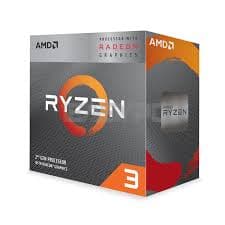
Ryzen 3 4100
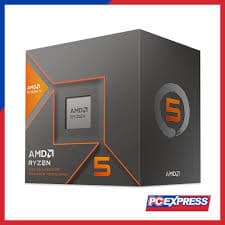
Ryzen 5 5600
gaming, 1080p
The short answer
This is a Ryzen 3 versus Ryzen 5 comparison with a real generational gap hiding inside it. The Ryzen 3 4100 is a cut-down Zen 2 chip with a tiny 6 MB cache and only 4 cores. The Ryzen 5 5600 is a proper Zen 3 chip with 6 cores and nearly six times the cache, and it is roughly 51% faster in games as a result, with an even bigger lead in productivity. Both share the same AM4 socket and DDR4 memory, so a build made for one drops the other in without changes. The 4100 only makes sense as the absolute floor of a budget build or an emergency placeholder chip. For anything meant to actually game, the 5600 is the one to buy, and its dollar-per-frame is close to the 4100's despite the far higher absolute performance.
The Ryzen 3 4100 and Ryzen 5 5600 both live on AMD's long-running AM4 socket, but they come from different architectural generations and different tiers entirely. The 4100 is a Zen 2 chip derived from AMD's APU silicon with the graphics fused off and a small cache, built to hit the lowest possible price point. The 5600 is a full Zen 3 desktop chip with two extra cores, a much larger cache, and a real IPC advantage.
This page covers full specs, 1080p gaming fps with a top-tier GPU, productivity benchmarks, a GPU-bottleneck checker, power draw, platform notes, and a clear verdict on whether the Ryzen 3 tier is worth the savings over stepping up to Ryzen 5.
At a glance
Six dimensions, two chips. Each owns different corners, bigger area is not automatically better.
Strengths radar
Each axis scored 0-100 relative to the pair
Gaming vs price
Up and to the left is better value
Grey dots are neighbouring chips for context.
Which should you buy?
Pick your use case, the winner changes with what you actually do.
The 5600's bigger cache and Zen 3 IPC give it a large, consistent lead, essential for high refresh rates.
The 4100 has a slightly lower dollar-per-frame, but only because its absolute performance is much lower.
Two extra cores and a real IPC gain give the 5600 far more headroom to encode while playing.
More cores and better IPC make the 5600 roughly twice as fast in Cinebench and Blender.
The 4100 is the cheapest way onto AM4, useful only as a placeholder or a non-gaming office box.
The 5600 responds better to PBO tuning thanks to more thermal headroom relative to its performance.
Own a 4100? Upgrade to a 5600 before anything else in the build.
Read this before you spend
This is one of the clearest upgrade cases on this site. Both chips share the same AM4 socket and DDR4 memory, so moving from a 4100 to a 5600 means swapping only the CPU for around 120 dollars and picking up roughly 51% more gaming frames plus a big productivity gain.
If a discrete GPU is already in the build, a 4100 is very likely the bottleneck holding it back. Upgrading the CPU here will do more for frame rates than a GPU upgrade would, which is rarely true once you get to mid-range and higher chips.
Full specification comparison
Every spec side by side. The highlighted figure wins each row.
| Specification | Ryzen 3 4100 | Ryzen 5 5600 |
|---|---|---|
| Architecture | ||
| Architecture | Zen 2 | Zen 3 ▲ |
| Process node | TSMC 7 nm | TSMC 7 nm |
| Release date | Apr 2022 | Apr 2022 |
| Launch MSRP | $99 ▲ | $199 |
| Cores & clocks | ||
| Cores / threads | 4 / 8 | 6 / 12 ▲ |
| Base / boost clock | 3.8 / 4.0 GHz | 3.5 / 4.4 GHz ▲ |
| Overclocking | Unlocked | Unlocked |
| Cache & memory | ||
| Total cache | 6 MB | 35 MB ▲ |
| 3D V-Cache | None | None |
| Memory support | DDR4-3200 | DDR4-3200 |
| Platform & power | ||
| Socket | AM4 | AM4 |
| TDP | 65 W | 65 W |
| Integrated graphics | None | None |
| Bundled cooler | Wraith Stealth | Wraith Stealth |
Gaming FPS by game
Tested at 1080p with a top GPU so the processor is the limit. Switch resolution and metric, the bars update live.
Average FPS at 1080p, paired with a top-tier GPU so the processor is the limit. The gap between these two chips is widest at 1080p and shrinks as resolution rises and the GPU takes over.
Cache, clocks and 1% lows
Why the cache and clock balance decides the gaming feel
This matchup shows how much cache matters even without 3D V-Cache in play. The 4100 is built from AMD's APU silicon with the graphics disabled, which comes with a much smaller 6 MB total cache. The 5600 is a full desktop Zen 3 chiplet design with 35 MB of combined cache, nearly six times as much.
That cache gap is a big part of why the 5600 pulls so far ahead in cache-sensitive esports titles like Counter-Strike 2, where it beats the 4100 by more than 60%. Games that rely on the CPU keeping data close at hand punish the 4100's small cache hardest, on top of its two-core disadvantage.
Productivity & content creation
Rendering, encoding and compiling lean on cores and threads more than games do, so the ranking can flip here.
Streaming and content work
The 4100's four cores and eight threads leave very little spare capacity for streaming, a software encode alongside a game will hurt both badly. The 5600's six cores and twelve threads make GPU-based NVENC or AV1 encoding comfortable and even leave some room for light software encoding, making it the only realistic streaming chip of the two.
Will these CPUs bottleneck your GPU?
A faster CPU only helps if your graphics card needs the frames. Pick your GPU and resolution to see expected fps and any bottleneck for each chip.
Will these CPUs bottleneck your GPU?
The willitbottleneck engine, built right into the comparison.
Estimated across a 17-GPU model at 1080p. A CPU only bottlenecks at 1080p with a fast GPU; push to higher resolutions and the GPU becomes the limit, so the bottleneck shrinks or disappears.
The 4100 will bottleneck almost any mid-range or better GPU at 1080p, its low core count and tiny cache cap frame rates well below what a decent graphics card can produce, especially in CPU-heavy esports titles. Pairing it with anything beyond an entry-level GPU wastes a real chunk of that card's potential.
The 5600 is a much better match for a mid-range GPU and holds up reasonably even with a stronger card at 1080p, though neither chip is the right pick to pair with a genuinely high-end GPU. At 1440p and 4K the gap between them narrows as the GPU takes on more of the load, but the 4100 still trails clearly.
Power draw, heat & cooler needs
What the chip actually pulls under load, how hot it runs, and the cooler you should budget for.
Platform, motherboard & memory
The chip price is only part of it. Socket, board cost, memory type and upgrade path decide the real bill.
Socket & upgrade path
Both chips use the AM4 socket and drop into the same B450 or B550 motherboards, which makes the 4100-to-5600 upgrade path simple, a CPU swap alone with no new board or memory required. AM4 is a mature, end-of-life platform at this point with no new chips coming, so neither CPU offers a further upgrade path beyond what AM4 already offers.
Memory: DDR4 vs DDR5
Both run DDR4 and get their best results from a 3200 MT/s CL16 kit, which is close to the practical ceiling for AM4's memory controller. Neither chip benefits much from memory faster than that, so there is no reason to pay for a premium DDR4 kit with either.
Price history & dollars-per-frame
Raw price is half the story. Cost per gaming frame is the number that decides it, and it keeps moving as prices fall.
Price over time
Street price of each chip (USD)
Overclocking & tuning
Both chips are unlocked and both include a bundled Wraith Stealth cooler adequate for light PBO tuning. The 5600 has more headroom relative to its performance and responds better to a modest all-core bump or Curve Optimizer undervolt. The 4100's low clock ceiling and small cache mean there is little to gain from overclocking it, the smarter move is simply upgrading to the 5600 instead.
Pros & cons
Ryzen 3 4100
- Cheapest way onto the AM4 platform
- Slightly better dollar-per-frame on paper
- Low power draw, runs on the bundled cooler
- About 51% slower in games
- No integrated graphics, needs a discrete GPU for any display
- Tiny cache limits performance in CPU-heavy titles
Ryzen 5 5600
- Roughly 51% faster in games, a large and consistent gap
- Close to double the multi-core productivity performance
- Same AM4 socket, drops straight into a 4100 build
- Costs about 70% more than the 4100
- No integrated graphics either, still needs a discrete GPU
Buying pitfalls
The 4100 has no integrated graphics
Unlike some Ryzen 3 desktop chips, the 4100 ships with its graphics fused off entirely. A discrete GPU is mandatory for any display output at all, not just for gaming, which is easy to miss when shopping on price alone.
Neither chip suits a high-end GPU
Even the 5600 will hold back a genuinely high-end graphics card at 1080p. If the plan is to pair either of these with an RTX 4070-class GPU or better, expect the CPU, not the card, to set your frame rate in many titles.
Ryzen 3 4100 vs Ryzen 5 5600: your questions answered
Yes, by a large margin. It is about 51% faster in games and nearly twice as fast in productivity work, thanks to two extra cores, higher IPC from Zen 3, and almost six times the cache. The 4100 only wins on raw upfront price.
Buy the Ryzen 5 tier, the 5600, for almost any real build, gaming or otherwise. The Ryzen 3 tier, the 4100, only makes sense as the absolute cheapest possible placeholder chip or for a non-gaming office box.
About 51% on average at 1080p with a top-tier GPU, and the gap stays large even at 1440p and 4K because the 4100's core count and cache are the limiting factor, not just clock speed.
Only for older or lighter esports titles at modest settings. In demanding or CPU-heavy games it will clearly bottleneck a mid-range or better GPU, and its lack of integrated graphics means a discrete card is required regardless.
The 5600, without much competition. The 4100's four cores leave almost no spare capacity for encoding while gaming, while the 5600's six cores handle GPU-based encoding comfortably.
Yes, almost certainly, with anything beyond an entry-level graphics card at 1080p. Its low core count and small 6 MB cache cap frame rates well below what a mid-range or better GPU can produce.
Yes. Both use the AM4 socket and DDR4 memory, so the same B450 or B550 board and the same DDR4 kit work with either chip, making an upgrade from one to the other a simple CPU swap.
Yes, this is one of the clearest upgrades available. Since both share AM4 and DDR4, it is a CPU-only swap for around 120 dollars that delivers roughly 51% more gaming frames and close to double the productivity performance.
No, neither has usable integrated graphics. The 4100 has its graphics fused off entirely and the 5600 is a graphics-less desktop chiplet design, so a discrete GPU is required for either build just to get a display.
Only if the budget genuinely cannot stretch to a 5600. The performance gap is large enough that most budget builds are better served by finding the extra 50 dollars for the 5600 instead.
The 5600 remains clearly ahead even at 4K, though the gap narrows somewhat as the GPU takes on more of the workload. Neither chip is the ideal pairing for a genuinely high-end 4K GPU.
Both are unlocked, but the 4100's low clock ceiling and tiny cache leave little room to gain from tuning. The 5600 responds better to Curve Optimizer undervolting or a small all-core bump.
Both are old enough that used pricing is common. A used 5600 around 95 dollars from a reputable seller is excellent value. A used 4100 saves little over its already low new price, so there is not much reason to seek one out used.
AM4 is a mature, end-of-life platform, AMD is not releasing new AM4 chips going forward. Both the 4100 and 5600 sit at the end of that road, so there is no further CPU upgrade beyond what AM4 already offers.
Both chips draw modest power, so a quality 450 to 550 W PSU comfortably covers a build with either chip and a mid-range GPU.
No, both run cool enough on their bundled Wraith Stealth coolers for stock operation. Only light overclocking on the 5600 might benefit from an aftermarket air cooler.