
Ryzen 7 7700X vs Ryzen 9 7900X
The complete head-to-head: full specs, real 1080p gaming fps with 1% lows, productivity benchmarks, a live GPU-bottleneck check, power, platform cost and a straight verdict.
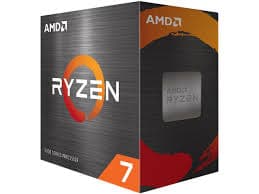
Ryzen 7 7700X
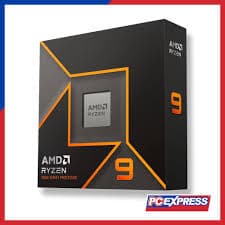
Ryzen 9 7900X
gaming, 1080p
The short answer
This is the Ryzen 7 versus Ryzen 9 question in its purest form, same generation, same socket, different core count. In games the Ryzen 9 7900X is only about 4% faster than the Ryzen 7 7700X, because most titles do not use more than eight cores well. In productivity the story flips hard, the 7900X's extra four cores make it far quicker at rendering, encoding, and compiling. It also costs 80 dollars more and draws considerably more power. If gaming is the priority, that 4% is not worth chasing and the 7700X is the smarter buy. If you split time between gaming and real multi-core work, the 7900X earns its price.
The Ryzen 7 7700X and Ryzen 9 7900X are both Zen 4 chips on AM5, built from the same architecture but aimed at different buyers. The 7700X is an 8-core chip tuned for gaming and everyday use at a lower price and power draw. The 7900X steps up to 12 cores and a higher boost clock, aimed at buyers who want strong gaming plus real headroom for heavier work.
This page covers full specs, 1080p gaming fps with a top-tier GPU, productivity benchmarks, a GPU-bottleneck checker, power draw, platform cost, and a clear verdict on whether the Ryzen 9 premium over the Ryzen 7 is worth paying.
At a glance
Six dimensions, two chips. Each owns different corners, bigger area is not automatically better.
Strengths radar
Each axis scored 0-100 relative to the pair
Gaming vs price
Up and to the left is better value
Grey dots are neighbouring chips for context.
Which should you buy?
Pick your use case, the winner changes with what you actually do.
The 7900X's higher boost clock gives it a small but real gaming edge at 1080p on a fast monitor.
The 7700X gives up only about 4% in games for 80 dollars less, the sharper dollar-per-frame pick.
Four extra cores give the 7900X much more headroom for a software encode running alongside the game.
50% more cores make the 7900X considerably faster in Cinebench, Blender, and code builds.
The 7700X's 105 W rating is far easier to cool quietly than the 7900X's 170 W ceiling.
The 7900X starts from a higher clock and its extra cores give PBO tuning more to work with.
Own a 7700X? Stay put unless you need more cores.
Read this before you spend
A 4% gaming gain for 80 extra dollars is not a gaming upgrade worth making, especially since both chips share the same AM5 board and DDR5 memory. That money moves frame rates far more if spent on a GPU instead.
The 7900X becomes worthwhile if you regularly render, encode video, or compile large projects, where its 50% core-count advantage over the 7700X shows up as a real, repeatable time saving rather than a marginal one.
Full specification comparison
Every spec side by side. The highlighted figure wins each row.
| Specification | Ryzen 7 7700X | Ryzen 9 7900X |
|---|---|---|
| Architecture | ||
| Architecture | Zen 4 | Zen 4 |
| Process node | TSMC 5 nm | TSMC 5 nm |
| Release date | Sep 27, 2022 | Sep 27, 2022 |
| Launch MSRP | $399 ▲ | $549 |
| Cores & clocks | ||
| Cores / threads | 8 / 16 | 12 / 24 ▲ |
| Base / boost clock | 4.5 / 5.4 GHz | 4.7 / 5.6 GHz ▲ |
| Overclocking | Unlocked | Unlocked |
| Cache & memory | ||
| Total cache | 40 MB | 76 MB ▲ |
| 3D V-Cache | None | None |
| Memory support | DDR5-5200 | DDR5-5200 |
| Platform & power | ||
| Socket | AM5 | AM5 |
| TDP | 105 W ▲ | 170 W |
| Integrated graphics | RDNA 2 (2 CU) | RDNA 2 (2 CU) |
| Bundled cooler | None | None |
Gaming FPS by game
Tested at 1080p with a top GPU so the processor is the limit. Switch resolution and metric, the bars update live.
Average FPS at 1080p, paired with a top-tier GPU so the processor is the limit. The gap between these two chips is widest at 1080p and shrinks as resolution rises and the GPU takes over.
Cache, clocks and 1% lows
Why the cache and clock balance decides the gaming feel
Neither chip uses 3D V-Cache, so this comparison is a straight case of clock speed and core count. The 7900X's slightly higher 5.6 GHz boost clock is the main reason it edges ahead in games, since most titles do not spread work evenly across more than eight cores.
The 7900X does carry nearly double the total cache at 76 MB against the 7700X's 40 MB, a byproduct of its two compute die design rather than a stacked V-Cache layer. That extra cache helps productivity workloads more than it helps games, which is why the gaming gap stays small while the multi-core gap is large.
Productivity & content creation
Rendering, encoding and compiling lean on cores and threads more than games do, so the ranking can flip here.
Streaming and content work
For streaming, the 7900X's four extra cores give it a real edge, enough spare capacity to run a full software x264 encode alongside the game with headroom left over. The 7700X manages GPU-based NVENC or AV1 encoding fine, but a demanding software encode will compete more noticeably for cycles.
Will these CPUs bottleneck your GPU?
A faster CPU only helps if your graphics card needs the frames. Pick your GPU and resolution to see expected fps and any bottleneck for each chip.
Will these CPUs bottleneck your GPU?
The willitbottleneck engine, built right into the comparison.
Estimated across a 17-GPU model at 1080p. A CPU only bottlenecks at 1080p with a fast GPU; push to higher resolutions and the GPU becomes the limit, so the bottleneck shrinks or disappears.
Both chips comfortably feed any current GPU at 1080p and above, the 4% gaming gap between them is small enough that neither will meaningfully bottleneck a high-end card differently from the other.
At 1440p and 4K the two are essentially tied in games, since the GPU becomes the limiting factor at higher resolutions. If your build targets 1440p or 4K, the cheaper 7700X delivers the same gaming result and the savings are better spent on the graphics card.
Power draw, heat & cooler needs
What the chip actually pulls under load, how hot it runs, and the cooler you should budget for.
Platform, motherboard & memory
The chip price is only part of it. Socket, board cost, memory type and upgrade path decide the real bill.
Socket & upgrade path
Both use the same AM5 socket and the same B650 or X670 motherboards, and AMD has committed to supporting AM5 with new chips into 2027 and beyond. Either chip carries the same upgrade path forward, so the decision comes down to core count needs today, not platform longevity.
Memory: DDR4 vs DDR5
Both run DDR5 and reach their best with a 6000 MT/s CL30 kit and the EXPO profile enabled. The 7900X's extra cores can use a little more memory bandwidth in heavily threaded workloads, but for gaming the same 6000 MT/s sweet spot applies to both chips.
Price history & dollars-per-frame
Raw price is half the story. Cost per gaming frame is the number that decides it, and it keeps moving as prices fall.
Price over time
Street price of each chip (USD)
Overclocking & tuning
Both chips are unlocked and gain the most from AMD's Curve Optimizer undervolting, which lowers temperatures and often improves sustained boost behavior more than a manual overclock does. The 7900X has more headroom for a modest all-core bump thanks to its higher starting clock, but its higher power draw already limits how much further tuning can add.
Pros & cons
Ryzen 7 7700X
- 80 dollars cheaper than the 7900X
- Lower power draw, easier to cool quietly
- Better dollar-per-frame for gaming-only builds
- About 4% slower in games
- Well behind in heavy multi-core work
Ryzen 9 7900X
- Slightly faster in games, about 4% on average
- 50% more cores, far ahead in rendering and compiling
- More headroom for streaming while gaming
- Costs 80 dollars more
- Draws considerably more power, needs stronger cooling
Buying pitfalls
The 7900X needs real cooling
At up to 170 W, the 7900X wants a 240mm AIO or a strong air tower to sustain its boost clocks under sustained multi-core load. A cooler sized for the 7700X's 105 W will leave performance on the table under heavy work.
Do not buy the 7900X for gaming alone
The gaming gap over the 7700X is only about 4%, well within the range where a better GPU or a faster storage drive would matter more. Buy the 7900X for its core count, not for a small gaming bump.
Ryzen 7 7700X vs Ryzen 9 7900X: your questions answered
For productivity, clearly, it is about 48% faster in multi-core work thanks to 12 cores against 8. For gaming, the gap is only about 4%, so the 7700X remains the sharper buy if gaming is the only priority.
Buy the Ryzen 7 tier, the 7700X, for a gaming-first build on a budget. Buy the Ryzen 9 tier, the 7900X, if you also render, encode, or compile regularly, where the extra four cores make a real difference.
About 4% on average at 1080p with a top-tier GPU, and the gap narrows further at 1440p and nearly disappears at 4K. Most titles do not use more than eight cores well, which caps the gaming benefit of the extra cores.
Yes, for light to moderate work it holds up fine. The 7900X only pulls meaningfully ahead in genuinely heavy, sustained multi-threaded tasks like large renders or long compiles.
The 7900X, thanks to its four extra cores, which leave more headroom for a software x264 encode running alongside the game. Both handle GPU-based NVENC or AV1 encoding equally well.
Barely, and no more than the 7900X does. The 4% gaming gap between them is too small to change bottleneck behavior meaningfully at any resolution.
Yes. Both are AM5 parts on DDR5, so one B650 or X670 board and one 6000 MT/s kit serve either chip.
Not really. An 80-dollar premium for about 4% more fps is a weak trade. The 7900X earns its price through its productivity lead, not through gaming performance.
A 240mm AIO or a strong air tower, since it can draw up to 170 W under full multi-core load. The 7700X is comfortable on a good mid-range air cooler at its 105 W rating.
They are essentially tied at 4K, since the GPU is the limiting factor there. If you game at 4K, the cheaper 7700X delivers the same result and the savings are better spent on the graphics card.
Yes, both ship with a minimal 2-compute-unit RDNA 2 iGPU that handles desktop output and diagnostics, though real gaming still needs a discrete card.
A used 7700X around 210 dollars is strong value for a gaming build. The 7900X's higher complexity and power draw make a new unit with warranty the safer choice unless the used discount is substantial.
Yes, both are unlocked and gain the most from Curve Optimizer undervolting. The 7900X has a bit more headroom for a small all-core bump given its higher starting clock, though its power draw already limits further gains.
The 7700X has 40 MB combined, the 7900X has 76 MB from its second compute die. That extra cache helps productivity workloads more than games, which is part of why the multi-core gap is so much larger than the gaming gap.
Because AM5 is committed through 2027 and past it, either chip gives you a real upgrade path, keeping the motherboard and RAM for a future swap.
A quality 600 to 650 W PSU covers a 7700X build with a strong GPU comfortably. The 7900X's higher draw calls for at least 700 W in a build with a high-end graphics card.