
Ryzen 5 2600 vs Ryzen 5 3600
The complete head-to-head: full specs, real 1080p gaming fps with 1% lows, productivity benchmarks, a live GPU-bottleneck check, power, platform cost and a straight verdict.
Ryzen 5 2600
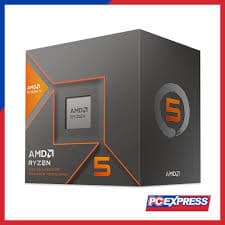
Ryzen 5 3600
gaming, 1080p
The short answer
This is not a close race. The Ryzen 5 3600 is about 26% faster than the Ryzen 5 2600 across games despite both being six-core, twelve-thread chips at the same 65 W TDP, because Zen 2 brought a genuinely better core design, nearly double the cache, and higher clocks. It also wins productivity by a similarly wide margin. The 2600 answers only with a much lower used price, often close to half what a 3600 costs, so it stays relevant purely as the cheapest possible AM4 build. If you can stretch the budget at all, buy the 3600, the generational gap is real and you will feel it in every game.
Both the Ryzen 5 2600 and Ryzen 5 3600 are six-core, twelve-thread chips on the same AM4 socket, which makes them look similar on a spec sheet. In practice they are a generation apart in a way that matters a lot: Zen+ in the 2600 is a modest refinement of the original Zen design, while Zen 2 in the 3600 is a genuine architectural rework with far more cache and a redesigned core.
Both now sell almost exclusively on the used market, usually for the cheapest possible AM4 rebuild. This page lays out real specs, 1080p gaming fps, productivity benchmarks, a GPU-bottleneck checker, power draw, and a straight verdict on whether the 2600's lower price is worth the performance you give up.
At a glance
Six dimensions, two chips. Each owns different corners, bigger area is not automatically better.
Strengths radar
Each axis scored 0-100 relative to the pair
Gaming vs price
Up and to the left is better value
Grey dots are neighbouring chips for context.
Which should you buy?
Pick your use case, the winner changes with what you actually do.
The 3600 is about 26% faster in games and productivity for roughly double the used price, still worth it.
If every dollar counts, the 2600 still runs modern games at reduced settings and is often the cheapest usable AM4 chip around.
The 3600 wins Cinebench and Blender by a wide margin despite matching core and thread counts.
Its higher per-core speed leaves noticeably more real-world headroom for software encoding than the 2600 has.
Both sit at 65 W on paper, but the 3600 delivers far more performance per watt in practice.
If a 2600 comes free with an old board, it is a fine starting point to game on until you can afford better.
Already on a 2600? This is a worthwhile upgrade.
Read this before you spend
Unlike most same-socket AM4 swaps, a 26% average gaming gain plus a similarly large productivity jump is big enough to actually notice in daily use. If you already own AM4 parts and a 3600 is affordable, this is one of the better cheap upgrades available on the platform.
If you are building fresh, only choose the 2600 when the price gap to a 3600 is large and every dollar genuinely matters. Otherwise the 3600 is worth stretching the budget for.
Full specification comparison
Every spec side by side. The highlighted figure wins each row.
| Specification | Ryzen 5 2600 | Ryzen 5 3600 |
|---|---|---|
| Architecture | ||
| Architecture | Zen+ | Zen 2 ▲ |
| Process node | GlobalFoundries 12 nm | TSMC 7 nm ▲ |
| Release date | Apr 19, 2018 | Jul 7, 2019 |
| Launch MSRP | $199 | $199 |
| Cores & clocks | ||
| Cores / threads | 6 / 12 | 6 / 12 |
| Base / boost clock | 3.4 / 3.9 GHz | 3.6 / 4.2 GHz ▲ |
| Overclocking | Unlocked | Unlocked |
| Cache & memory | ||
| Total cache | 19 MB | 35 MB ▲ |
| 3D V-Cache | No | No |
| Memory support | DDR4-2933 | DDR4-3200 ▲ |
| Platform & power | ||
| Socket | AM4 | AM4 |
| TDP | 65 W | 65 W |
| Integrated graphics | None | None |
| Bundled cooler | Wraith Stealth | Wraith Stealth |
Gaming FPS by game
Tested at 1080p with a top GPU so the processor is the limit. Switch resolution and metric, the bars update live.
Average FPS at 1080p, paired with a top-tier GPU so the processor is the limit. The gap between these two chips is widest at 1080p and shrinks as resolution rises and the GPU takes over.
Cache, clocks and 1% lows
Why the cache and clock balance decides the gaming feel
The 2600 carries 19 MB of total cache split across two Zen+ core complexes, each with its own smaller L3 slice, so threads pay a latency cost reaching across complexes. The 3600 nearly doubles total cache to 35 MB and pairs it with Zen 2's improved core design, which is the single biggest reason the gap between these two chips is so much wider than a typical same-tier AM4 comparison.
Neither chip carries 3D V-Cache, that technology arrived two generations later. What separates them is a genuine architectural jump, not a stacked-cache trick, and it shows up everywhere from gaming to single-thread productivity, not just in one narrow benchmark.
Productivity & content creation
Rendering, encoding and compiling lean on cores and threads more than games do, so the ranking can flip here.
Streaming and content work
Both chips have the same core and thread count, but the 3600's higher per-core speed and better cache design leave it noticeably more real-world headroom for x264 software encoding while gaming. The 2600 can still stream at lighter settings or with GPU-based encoding like NVENC, but pushing a demanding software encode alongside a modern game will show its age faster.
Will these CPUs bottleneck your GPU?
A faster CPU only helps if your graphics card needs the frames. Pick your GPU and resolution to see expected fps and any bottleneck for each chip.
Will these CPUs bottleneck your GPU?
The willitbottleneck engine, built right into the comparison.
Estimated across a 17-GPU model at 1080p. A CPU only bottlenecks at 1080p with a fast GPU; push to higher resolutions and the GPU becomes the limit, so the bottleneck shrinks or disappears.
Neither chip comes close to feeding a current flagship GPU at 1080p in CPU-heavy titles, and the 2600 bottlenecks noticeably harder than the 3600 does. Pair either with a budget or mid-range card rather than a high-end one to keep the CPU from holding back your frame rate.
At 1440p and 4K the GPU takes over as the limiter for both chips, but the 3600 still holds a real fps advantage even there, unlike closer same-generation matchups where the gap disappears entirely at higher resolutions.
Power draw, heat & cooler needs
What the chip actually pulls under load, how hot it runs, and the cooler you should budget for.
Platform, motherboard & memory
The chip price is only part of it. Socket, board cost, memory type and upgrade path decide the real bill.
Socket & upgrade path
Both use the identical AM4 socket and both are effectively end-of-line platforms with no further CPU releases planned for either. A B450 board handles both chips comfortably, so the platform decision comes down entirely to price and the performance you are willing to give up.
Memory: DDR4 vs DDR5
The 2600 officially supports DDR4-2933 while the 3600 supports DDR4-3200, and Zen 2's revised memory controller extracts more from a fast kit than Zen+ does. A 3000 to 3200 MT/s CL16 kit suits the 2600 well, while the 3600 rewards pushing to 3200 or 3600 MT/s if your board and budget allow it.
Price history & dollars-per-frame
Raw price is half the story. Cost per gaming frame is the number that decides it, and it keeps moving as prices fall.
Price over time
Street price of each chip (USD)
Overclocking & tuning
Both chips are fully unlocked, but the 2600 has more room to gain from an all-core Precision Boost Overdrive tune since its stock clocks are set more conservatively. The 3600 already runs closer to its efficient ceiling out of the box, so its overclocking upside is smaller, and undervolting for lower temperatures is usually the better use of tuning time on it.
Pros & cons
Ryzen 5 2600
- Often close to half the used price of a 3600
- Still plays modern games at reduced settings
- Same core and thread count for basic multitasking
- About 26% slower in games on average
- Well behind in productivity despite matching cores
- Older architecture with noticeably higher latency
Ryzen 5 3600
- About 26% faster in games, a gap you will actually feel
- Well ahead in productivity despite the same core count
- Nearly double the cache and a much better architecture
- Costs roughly double the 2600 on the used market
- Still an aging chip that will bottleneck a fast GPU
Buying pitfalls
Do not expect a small gap here
Unlike a same-generation AM4 comparison, this is a real architectural jump. Budget for the 3600 if you can, the 2600's lower price comes with a performance cost you will notice in nearly every game and workload, not just synthetic benchmarks.
Verify board BIOS support before buying either used
An early B350 or X370 board may need a BIOS update, sometimes requiring an older CPU to perform the flash, before either chip boots reliably at full speed. Confirm your board's BIOS version and AGESA support first.
Ryzen 5 2600 vs Ryzen 5 3600: your questions answered
Yes, clearly. The 3600 is about 26% faster in games and even further ahead in productivity, despite both chips having the same six cores and twelve threads. Zen 2's architecture and nearly double the cache make the real difference.
The 2600 and 3600 are a full architecture apart, Zen+ versus Zen 2, unlike closer comparisons between two chips of the same generation. Zen 2 brought a genuine redesign, not just a clock bump, which is why the performance gap here is unusually wide for a same-socket match.
Only if the price gap to a 3600 is large and every dollar matters. The 2600 still runs modern games at reduced settings, but you will feel the difference in nearly every title compared to a 3600.
Yes, as a starting point. If a 2600 comes with a free or cheap hand-me-down board, it is a perfectly fine chip to game on while you save toward a bigger upgrade later.
The 3600, thanks to its higher per-core speed and better architecture, even though both chips have the same twelve threads. The 2600 can still stream at lighter settings or with GPU-based encoding like NVENC.
Both will bottleneck a current flagship GPU at 1080p in CPU-heavy games, the 2600 more severely. Even at 1440p and 4K, the 3600 keeps a real fps lead, unlike closer AM4 matchups where the gap disappears at higher resolutions.
Yes. Both use AM4 and DDR4, so the same B450 board and a similar memory kit work for either chip. An older board may need a BIOS update before running either reliably.
They are close on paper, both rated at 65 W, with the 2600 drawing marginally less in practice. The 3600 delivers far more performance for that similar power draw, so it is the more efficient chip per unit of work.
Yes, both are unlocked. The 2600 has more headroom to gain from an all-core Precision Boost Overdrive tune since its stock clocks are more conservative. The 3600 gains less from a flat overclock since it already runs close to its efficient ceiling.
Yes, this is one of the more worthwhile same-socket AM4 upgrades available, since the roughly 26% gaming gain plus the productivity jump is large enough to notice in daily use, and nothing else in your build has to change.
The 3600 overall, since the performance gap is too large to ignore for most builds. The 2600 only wins on value if your budget is genuinely at the rock-bottom end, where its much lower price outweighs the performance you give up.
No, neither the 2600 nor the 3600 includes integrated graphics, so a discrete GPU is required to get a display output from either chip.
A great deal. The 3600 has almost double the total cache of the 2600, 35 MB versus 19 MB, and Zen 2's unified design cuts inter-core latency that Zen+ suffered from. That is a major reason the gap is so much wider than a typical same-generation AM4 comparison.
The 3600 still holds a real advantage even at 4K, unlike closer same-generation matchups where the CPU gap disappears at higher resolutions. If you are on a strict budget, the 2600 is usable at 4K, but the 3600 remains the better pick.
Only for a genuinely rock-bottom budget build. AM4 has no further CPU releases coming, so treat either chip as a value end point, and plan on a newer platform entirely for your next real upgrade.
A basic 450 to 550 W power supply comfortably covers a build with either chip paired with a budget or mid-range GPU, since both sit at a modest 65 W TDP and neither draws much power even under full load.