
Ryzen 7 3700X vs Ryzen 5 3600
The complete head-to-head: full specs, real 1080p gaming fps with 1% lows, productivity benchmarks, a live GPU-bottleneck check, power, platform cost and a straight verdict.
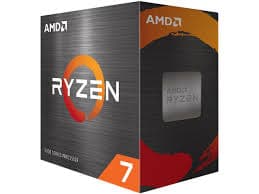
Ryzen 7 3700X
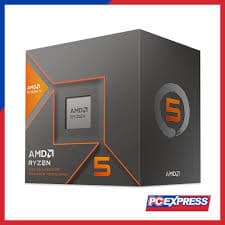
Ryzen 5 3600
gaming, 1080p
The short answer
The Ryzen 7 3700X is the stronger all-round chip, about 7% faster in games and roughly 35% ahead in multi-threaded work thanks to its two extra cores, and it ships with AMD's better Wraith Prism cooler. The Ryzen 5 3600 answers with a meaningfully lower price and nearly the same gaming performance, since both share the same Zen 2 architecture and clock speeds. Both are now aging AM4 chips sold mostly as budget or used options in 2026, so the real question is less which chip wins and more whether either is still worth buying instead of moving to a current platform.
The Ryzen 7 3700X and Ryzen 5 3600 are two of the most popular chips from AMD's 2019 Zen 2 launch, sharing the same 7 nm architecture, the same AM4 socket, and even the same clock speeds. The only real difference is two extra cores on the 3700X. Both were built years before AMD's fastest gaming chips existed, so judged against a modern top-tier GPU they show their age.
By 2026 both chips are sold mostly as budget builds or secondhand upgrades rather than new-build recommendations. What follows lays out full specs, 1080p gaming fps, productivity benchmarks, a GPU-bottleneck checker, power, platform cost, and a straight verdict for anyone choosing between them today.
At a glance
Six dimensions, two chips. Each owns different corners, bigger area is not automatically better.
Strengths radar
Each axis scored 0-100 relative to the pair
Gaming vs price
Up and to the left is better value
Grey dots are neighbouring chips for context.
Which should you buy?
Pick your use case, the winner changes with what you actually do.
The 3600 gets within 7% of the 3700X's frame rate for a much lower price, the smart pick if gaming is the only goal.
The extra two cores give the 3700X more room to run x264 software encoding alongside the game.
If you are patching an old AM4 build, the 3700X's extra cores make it age better over the next few years.
35% more multi-thread throughput makes the 3700X the clear choice for real productivity work.
The 3600 keeps the build cheap and simple while still delivering strong 1080p frame rates.
In CS2 and Valorant the gap barely matters, put the savings toward a better GPU instead.
Already on a Ryzen 5 3600? Think twice about the 3700X.
Read this before you spend
A 7% average gaming gain is not worth 45 dollars on a socket AMD has already closed out. You would spend real money to move the needle only in a handful of thread-hungry titles, on a platform with no CPU upgrades left to buy.
If you are building fresh on AM4 for the lowest possible cost, take whichever chip you can find cheaper. If you have room in the budget and plan to keep the system for a few more years of light productivity work alongside gaming, the 3700X's extra cores are the better long-term bet.
Full specification comparison
Every spec side by side. The highlighted figure wins each row.
| Specification | Ryzen 7 3700X | Ryzen 5 3600 |
|---|---|---|
| Architecture | ||
| Architecture | Zen 2 | Zen 2 |
| Process node | TSMC 7 nm | TSMC 7 nm |
| Release date | Jul 7, 2019 | Jul 7, 2019 |
| Launch MSRP | $329 | $199 ▲ |
| Cores & clocks | ||
| Cores / threads | 8 / 16 ▲ | 6 / 12 |
| Base / boost clock | 3.6 / 4.4 GHz ▲ | 3.6 / 4.2 GHz |
| Overclocking | Unlocked | Unlocked |
| Cache & memory | ||
| Total cache | 36 MB ▲ | 35 MB |
| L3 cache | 32 MB | 32 MB |
| Memory support | DDR4-3200 | DDR4-3200 |
| Platform & power | ||
| Socket | AM4 | AM4 |
| TDP | 65 W | 65 W |
| Integrated graphics | None | None |
| Bundled cooler | Wraith Prism (RGB) ▲ | Wraith Stealth |
Gaming FPS by game
Tested at 1080p with a top GPU so the processor is the limit. Switch resolution and metric, the bars update live.
Average FPS at 1080p, paired with a top-tier GPU so the processor is the limit. The gap between these two chips is widest at 1080p and shrinks as resolution rises and the GPU takes over.
Cache, clocks and 1% lows
Why the cache and clock balance decides the gaming feel
Neither chip uses AMD's 3D V-Cache, that technology arrived two years later with the 5800X3D. The 3700X and 3600 rely on ordinary L2 and L3 cache, with the 3700X's extra two cores giving it 1 MB more L2 and a slightly larger cache total than the 3600.
In practice the cache difference between them is small. Most of the 3700X's edge in games and nearly all of its edge in productivity comes from having two more cores and threads to work with, not from cache size.
Productivity & content creation
Rendering, encoding and compiling lean on cores and threads more than games do, so the ranking can flip here.
Streaming and content work
With only 6 to 8 threads between them, neither chip has much spare headroom for demanding software encoding while gaming. The 3700X's extra cores make it the safer pick for x264 streaming, while the 3600 is better paired with GPU-based NVENC encoding so the CPU only has to run the game.
Will these CPUs bottleneck your GPU?
A faster CPU only helps if your graphics card needs the frames. Pick your GPU and resolution to see expected fps and any bottleneck for each chip.
Will these CPUs bottleneck your GPU?
The willitbottleneck engine, built right into the comparison.
Estimated across a 17-GPU model at 1080p. A CPU only bottlenecks at 1080p with a fast GPU; push to higher resolutions and the GPU becomes the limit, so the bottleneck shrinks or disappears.
Paired with a genuinely top-tier GPU at 1080p, both of these aging Zen 2 chips will start to limit frame rates in modern CPU-heavy titles, they were simply not built for today's fastest graphics cards.
At 1440p and 4K the GPU takes over as the limiting factor and the gap between the two nearly disappears. If you game at 1440p or 4K, either chip does the job and the graphics card matters far more.
Power draw, heat & cooler needs
What the chip actually pulls under load, how hot it runs, and the cooler you should budget for.
Platform, motherboard & memory
The chip price is only part of it. Socket, board cost, memory type and upgrade path decide the real bill.
Socket & upgrade path
Both use the AM4 socket, which AMD has closed out after the 5000 series. Whichever you buy, there is no further CPU upgrade coming to this platform, so think of either chip as an end point rather than a stepping stone.
Memory: DDR4 vs DDR5
Both run DDR4 and get their best results from a fast DDR4-3600 CL16 kit with the motherboard's memory boost or XMP profile enabled. Zen 2's Infinity Fabric scales well with faster memory, so it is worth the small extra cost over base-spec DDR4-2666.
Price history & dollars-per-frame
Raw price is half the story. Cost per gaming frame is the number that decides it, and it keeps moving as prices fall.
Price over time
Street price of each chip (USD)
Overclocking & tuning
Both chips are fully unlocked for PBO and manual overclocking, standard for the whole Zen 2 lineup. Gains are modest on either chip by 2026 standards, undervolting for lower temperatures is usually the more useful tweak than chasing extra clock speed.
Pros & cons
Ryzen 7 3700X
- Two extra cores give it a real edge in games and productivity
- Ships with the better Wraith Prism cooler
- Still a capable 8-core chip for light modern workloads
- Costs noticeably more than the 3600
- Runs a little hotter under sustained multi-core load
Ryzen 5 3600
- Nearly matches the 3700X in games for much less money
- Same AM4 platform and DDR4 memory as the 3700X
- Still includes a usable stock cooler
- Falls behind in any thread-heavy workload
- Fewer cores age worse for future multitasking
Buying pitfalls
AM4 is a dead-end platform
Buying either chip locks you into a socket AMD has already closed out. The last CPU AM4 ever received was the 5000 series, so there is no future upgrade waiting, budget for the whole build you want now.
Most stock is used or old inventory
Both chips are long out of production, so most listings in 2026 are used or leftover retail stock. Buy from a reputable seller, confirm the chip is genuine, and expect no manufacturer warranty on used units.
Ryzen 7 3700X vs Ryzen 5 3600: your questions answered
Yes, overall. The 3700X is about 7% faster in games and roughly 35% ahead in multi-threaded work thanks to two extra cores, plus it ships with AMD's better Wraith Prism cooler. The 3600 answers with a meaningfully lower price and nearly the same gaming performance.
For a budget or secondhand AM4 build, the 3600 is the smarter buy, it gets within 7% of the 3700X's frame rate for a lot less money. Only step up to the 3700X if you also do rendering, compiling, or other multi-threaded work where the extra cores matter.
Around 7% on average at 1080p with a top-tier GPU. Since both chips share the same clock speeds and architecture, most of that gap comes from the 3700X's two extra cores helping in a handful of thread-hungry titles, not from raw speed.
The 3700X, clearly. Its two extra cores give it roughly 35% more throughput in Cinebench-style multi-core work and a real edge in rendering and compiling. The 3600 stays close only in lightly threaded tasks.
The 3700X. Its extra cores give it more headroom to run x264 software encoding alongside a game. The 3600 is better paired with GPU-based NVENC encoding, which barely touches the CPU.
Yes, to some degree. Both are 2019 chips, so paired with a genuinely top-tier GPU at 1080p they will start to cap frame rates in CPU-heavy titles. At 1440p and 4K the GPU becomes the limiting factor and the gap nearly disappears.
No, both include a stock cooler in the box, Wraith Prism on the 3700X and Wraith Stealth on the 3600, and either is enough for stock clocks. A better air cooler helps if you plan to overclock.
Yes. Both use the AM4 socket and DDR4 memory, so any B450 or X470 board works with either chip. A fast DDR4-3600 CL16 kit with the motherboard's memory boost profile enabled gets the most out of either.
No. 3D V-Cache launched two years later with the 5800X3D. The 3700X and 3600 rely on ordinary L2 and L3 cache, with only a small total difference between them.
Yes, both are fully unlocked for PBO and manual overclocking, standard for Zen 2. Gains are modest on either chip by 2026 standards, undervolting for lower temperatures is usually the more useful tweak.
Both are long out of production, so most stock in 2026 is used or old retail inventory. A used 3600 around 55 dollars is fine value from a reputable seller, buying new is rarely an option for either chip anymore.
They are effectively tied at 4K, because the GPU is the limiting factor there, not either CPU. If you game at 4K, the cheaper 3600 is the better buy and the savings are better spent on the graphics card.
None going forward. Both use the AM4 socket, which AMD closed out after the 5000 series, so there is no newer CPU to drop in later. Think of either chip as an end point, not a stepping stone.
Only if you do real multi-threaded work. For gaming alone the 7% gap is not worth the higher price, but the 3700X's 35% productivity lead is a real, practical difference for rendering, compiling, or heavy multitasking.
16 GB of DDR4 is the practical minimum for gaming in 2026, and 32 GB is a safer choice if you multitask or run background apps while gaming, especially on the 6-core 3600.
Usually not. A 7% gaming gain on the same aging AM4 board is a small return, and the money is better saved toward a full move to a current AM5 or Intel platform, which will do far more for performance than swapping within Zen 2.