
Ryzen 7 5800X3D vs Ryzen 5 5600X
The complete head-to-head: full specs, real 1080p gaming fps with 1% lows, productivity benchmarks, a live GPU-bottleneck check, power, platform cost and a straight verdict.
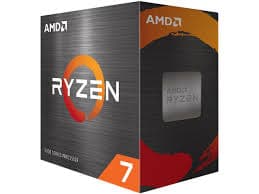
Ryzen 7 5800X3D
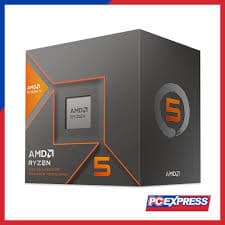
Ryzen 5 5600X
gaming, 1080p
The short answer
The Ryzen 7 5800X3D is the undisputed gaming king of AM4, about 26% faster than the Ryzen 5 5600X in 1080p games thanks to its stack of 3D V-Cache. It also pulls ahead in multi-core work because it has two more cores. The 5600X answers back with a much lower price, a lower TDP, and an unlocked multiplier for real overclocking, something the 5800X3D cannot do. If you already own an AM4 board and want the fastest gaming chip that socket will ever get, buy the 5800X3D. If you are building a tight budget AM4 rig or the 26% gap does not matter to you, the 5600X is still a genuinely good chip for far less money.
Both chips share the same AM4 socket and Zen 3 architecture, but they take opposite approaches to speed. The 5800X3D trades clock speed for a huge slab of extra L3 cache stacked on top of the die, which is why it became AMD's late-cycle answer for AM4 gaming builds. The 5600X is the plainer, cheaper 6-core chip that launched two years earlier and still holds up well for everyday use.
The question for most AM4 owners is simple: is a 26% gaming boost worth roughly 65 dollars more, especially when neither chip needs a new motherboard or memory kit. What follows lays out full specs, 1080p gaming fps with 1% lows, productivity benchmarks, a GPU-bottleneck checker, power, platform cost, and a straight verdict.
At a glance
Six dimensions, two chips. Each owns different corners, bigger area is not automatically better.
Strengths radar
Each axis scored 0-100 relative to the pair
Gaming vs price
Up and to the left is better value
Grey dots are neighbouring chips for context.
Which should you buy?
Pick your use case, the winner changes with what you actually do.
The 5800X3D's cache keeps 1% lows high and is the fastest gaming chip AM4 ever received.
The 5600X gives up 26% average fps but costs about 65 dollars less, a fair trade on a tight budget.
8 cores and 16 threads leave more headroom for x264 software encoding alongside the game.
Two extra cores give the 5800X3D a real lead in Cinebench, Blender and code builds.
Lower TDP and a bundled cooler make the 5600X easier to run cool and quiet in a compact case.
The 5600X has an unlocked multiplier and real all-core overclocking headroom the locked 5800X3D lacks.
Already on a 5600X? Think about it before you swap.
Read this before you spend
A 26% average gaming gain is real and noticeable at high refresh rates, and since both chips drop into the same AM4 board and DDR4 kit, the 5800X3D is a drop-in swap with no other cost. If you game a lot and your board supports it, it is one of the few remaining upgrades that actually stretches an AM4 build's life.
If your budget is tight or you mostly do light gaming and everyday tasks, the 5600X still does the job well and the money is better spent on a GPU upgrade, which affects every game and resolution, not just CPU-bound ones.
Full specification comparison
Every spec side by side. The highlighted figure wins each row.
| Specification | Ryzen 7 5800X3D | Ryzen 5 5600X |
|---|---|---|
| Architecture | ||
| Architecture | Zen 3 | Zen 3 |
| Process node | TSMC 7 nm | TSMC 7 nm |
| Release date | Apr 20, 2022 | Nov 5, 2020 |
| Launch MSRP | $449 | $299 ▲ |
| Cores & clocks | ||
| Cores / threads | 8 / 16 ▲ | 6 / 12 |
| Base / boost clock | 3.4 / 4.5 GHz | 3.7 / 4.6 GHz ▲ |
| Overclocking | Locked (multiplier) | Unlocked ▲ |
| Cache & memory | ||
| Total cache | 100 MB ▲ | 35 MB |
| 3D V-Cache | 64 MB (stacked) ▲ | None |
| Memory support | DDR4-3200 | DDR4-3200 |
| Platform & power | ||
| Socket | AM4 | AM4 |
| TDP | 105 W | 65 W ▲ |
| Integrated graphics | None | None |
| Bundled cooler | None | Wraith Stealth ▲ |
Gaming FPS by game
Tested at 1080p with a top GPU so the processor is the limit. Switch resolution and metric, the bars update live.
Average FPS at 1080p, paired with a top-tier GPU so the processor is the limit. The gap between these two chips is widest at 1080p and shrinks as resolution rises and the GPU takes over.
Cache, clocks and 1% lows
Why the cache and clock balance decides the gaming feel
The 5800X3D wins its gaming crown for one reason: 64 MB of extra L3 cache stacked directly on top of the compute die, bringing its total cache to 100 MB against the 5600X's plain 35 MB. Games keep more of their working data on the chip instead of reaching out to system memory, which is exactly the kind of latency-sensitive work that AM4's DDR4 memory controller struggles with at high refresh rates.
That is also why the 5800X3D clocks lower than the 5600X despite being the faster gaming chip. The extra cache generates heat and needs a lower voltage ceiling to stay stable, so AMD locked the multiplier and capped boost at 4.5 GHz. The 5600X has no such cache and clocks a little higher instead, which keeps it competitive in single-thread tasks even though it loses badly in games that reward cache.
Productivity & content creation
Rendering, encoding and compiling lean on cores and threads more than games do, so the ranking can flip here.
Streaming and content work
For streaming while gaming, the 5800X3D's extra two cores and four threads give it real headroom for x264 software encoding without dropping frames in the game itself. The 5600X is still fine for streaming if you use your GPU's NVENC or AV1 encoder instead of the CPU, which is what most streamers on either chip should do anyway.
Will these CPUs bottleneck your GPU?
A faster CPU only helps if your graphics card needs the frames. Pick your GPU and resolution to see expected fps and any bottleneck for each chip.
Will these CPUs bottleneck your GPU?
The willitbottleneck engine, built right into the comparison.
Estimated across a 17-GPU model at 1080p. A CPU only bottlenecks at 1080p with a fast GPU; push to higher resolutions and the GPU becomes the limit, so the bottleneck shrinks or disappears.
Both of these chips are several years old now, so pairing either with a current top-tier GPU at 1080p is where the real CPU-bound gap shows up, and it is a large one at 26%. That gap is the clearest signal on this whole page that the 5800X3D is still worth chasing for a high-refresh AM4 build.
At 1440p the gap narrows meaningfully as the GPU starts to share the load, and at 4K both chips are close to tied because the graphics card becomes the limiting factor. If you game at 4K on AM4, save the money and buy the 5600X.
Power draw, heat & cooler needs
What the chip actually pulls under load, how hot it runs, and the cooler you should budget for.
Platform, motherboard & memory
The chip price is only part of it. Socket, board cost, memory type and upgrade path decide the real bill.
Socket & upgrade path
Both chips use the same AM4 socket and work in any B450, B550 or X570 motherboard with a BIOS update, so there is zero platform cost to choosing either one. AM4 is effectively at the end of its life with no new chip generations planned, so neither purchase buys you a future upgrade path the way an AM5 chip would.
Memory: DDR4 vs DDR5
Both are built around DDR4-3200 as the sweet spot, and a fast DDR4-3600 CL16 kit with the right timings can add a few percent in games on either chip. The 5800X3D benefits less from fast memory than most CPUs because its huge cache already hides a lot of memory latency, so it is not worth chasing exotic kits for it.
Price history & dollars-per-frame
Raw price is half the story. Cost per gaming frame is the number that decides it, and it keeps moving as prices fall.
Price over time
Street price of each chip (USD)
Overclocking & tuning
The 5600X has an unlocked multiplier and can often reach close to 4.7 GHz all-core with a decent cooler, a real and repeatable gain over its 4.6 GHz stock boost. The 5800X3D is locked to protect its stacked cache, so tuning is limited to PBO's Curve Optimizer and faster memory timings, both of which mainly lower temperatures and power draw rather than raise frame rates.
Pros & cons
Ryzen 7 5800X3D
- Fastest gaming chip AM4 ever received, about 26% ahead of the 5600X
- Two extra cores give it a real lead in rendering and compiling
- Drop-in upgrade for anyone already on an AM4 board and DDR4 kit
- Costs about 65 dollars more than the 5600X
- Locked multiplier, no real overclocking headroom
Ryzen 5 5600X
- Roughly 65 dollars cheaper, the budget AM4 gaming pick
- Unlocked multiplier with genuine all-core overclocking room
- Lower TDP, runs cooler, and ships with a usable stock cooler
- About 26% slower in games and behind in multi-core work
- No 3D V-Cache, so it struggles in cache-hungry titles
Buying pitfalls
AM4 is a mature platform, not a future one
If you are building a brand-new PC with no existing AM4 parts, consider whether an AM5 chip like the Ryzen 5 7600X makes more sense, since it opens a real upgrade path that AM4 no longer offers. These two chips make the most sense as an upgrade for someone who already owns AM4 hardware.
The 5800X3D cannot be multiplier overclocked
Unlike most Ryzen chips, the 5800X3D's multiplier is locked to protect the stacked cache, so you are limited to Curve Optimizer undervolting and memory tuning. The 5600X has a fully unlocked multiplier and can gain a genuine few percent from a manual all-core overclock with good cooling.
Ryzen 7 5800X3D vs Ryzen 5 5600X: your questions answered
For gaming, clearly yes. The 5800X3D is about 26% faster in games at 1080p thanks to its 3D V-Cache and also wins productivity tasks because it has two more cores. The 5600X answers with a lower price, an unlocked multiplier and lower power draw, so it is still the better pick on a tight budget.
Around 26% on average at 1080p with a strong GPU, where the CPU is the limiting factor. The gap narrows at 1440p and shrinks further at 4K, where the graphics card becomes the bottleneck instead of the processor.
If you already own an AM4 board and DDR4 memory and you game a lot at high refresh rates, yes, it is a drop-in swap that adds a real 26% average gaming gain. If you mostly do light gaming or productivity, the money is better spent on a GPU upgrade instead.
Yes, for a budget AM4 build. It costs roughly 65 dollars less than the 5800X3D, ships with a usable cooler, and still handles modern games well, just without the extra cache that pushes 1% lows and average fps higher on the 5800X3D.
The 5800X3D, since its 8 cores and 16 threads leave more room for x264 software encoding without dropping frames in the game. The 5600X still streams well if you use your GPU's NVENC or AV1 hardware encoder instead of the CPU.
Not in the traditional sense. Its multiplier is locked to protect the stacked 3D V-Cache, so you are limited to PBO's Curve Optimizer and memory tuning. The 5600X has a fully unlocked multiplier and can gain a genuine few percent from a manual all-core overclock.
Yes. Both use the AM4 socket and DDR4-3200 memory, so any B450, B550 or X570 board with an updated BIOS runs either chip and the same memory kit works for both. There is no platform cost difference between the two.
The 5600X is more likely to, especially at 1080p with a fast current GPU, since it lacks the extra cache that keeps the 5800X3D's frame times smooth. At 1440p and 4K the gap shrinks a lot because the GPU becomes the limiting factor for both chips. Use the checker on this page to see it for your GPU.
The 5600X ships with AMD's Wraith Stealth cooler, which is enough for stock operation. The 5800X3D does not include a cooler and, while it does not run hot for gaming, a good mid-range air cooler is recommended since it cannot be overclocked to justify anything larger.
For a dedicated gaming build, yes, the 26% average fps gain and much better 1% lows are easy to feel at high refresh rates. For a budget or general-use PC where gaming is not the priority, the 5600X delivers most of the experience for significantly less money.
Both are built around DDR4-3200 as the baseline, and a fast DDR4-3600 CL16 kit adds a small amount in games on either chip. The 5800X3D benefits less from fast memory than most CPUs because its large cache already hides a lot of memory latency.
They are close to tied at 4K because the GPU becomes the limiting factor at that resolution, not the CPU. If your build is aimed at 4K gaming, buy the cheaper 5600X and put the savings toward the graphics card instead.
No, neither the 5800X3D nor the 5600X includes an integrated GPU, so both require a discrete graphics card to output a picture at all, unlike the G-series AM4 chips such as the 5600G.
A used 5600X around 90 dollars is a smart budget pick if you buy from a reputable seller and confirm it works. For the fastest AM4 gaming chip with less risk, a new or lightly used 5800X3D around 150 to 180 dollars is worth the premium.
Only if you already have AM4 parts on hand or you are chasing rock-bottom cost, since the platform will not receive future CPU generations. A fresh build with no existing hardware is usually better served by an AM5 chip like the Ryzen 5 7600X, which has a real upgrade path ahead of it.
The 5800X3D, since its two extra cores help with rendering, compiling and multitasking while its cache keeps gaming performance well ahead of the 5600X. The 5600X is better reserved for a build focused purely on budget gaming.