
RTX 3080 vs RTX 4080
The complete head-to-head: full specs, real per-game FPS with 1% lows, ray tracing, a live CPU-bottleneck check, thermals, power and value, with a straight verdict.
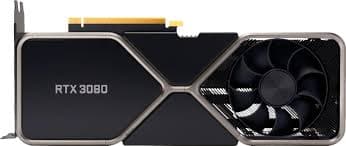
GeForce RTX 3080
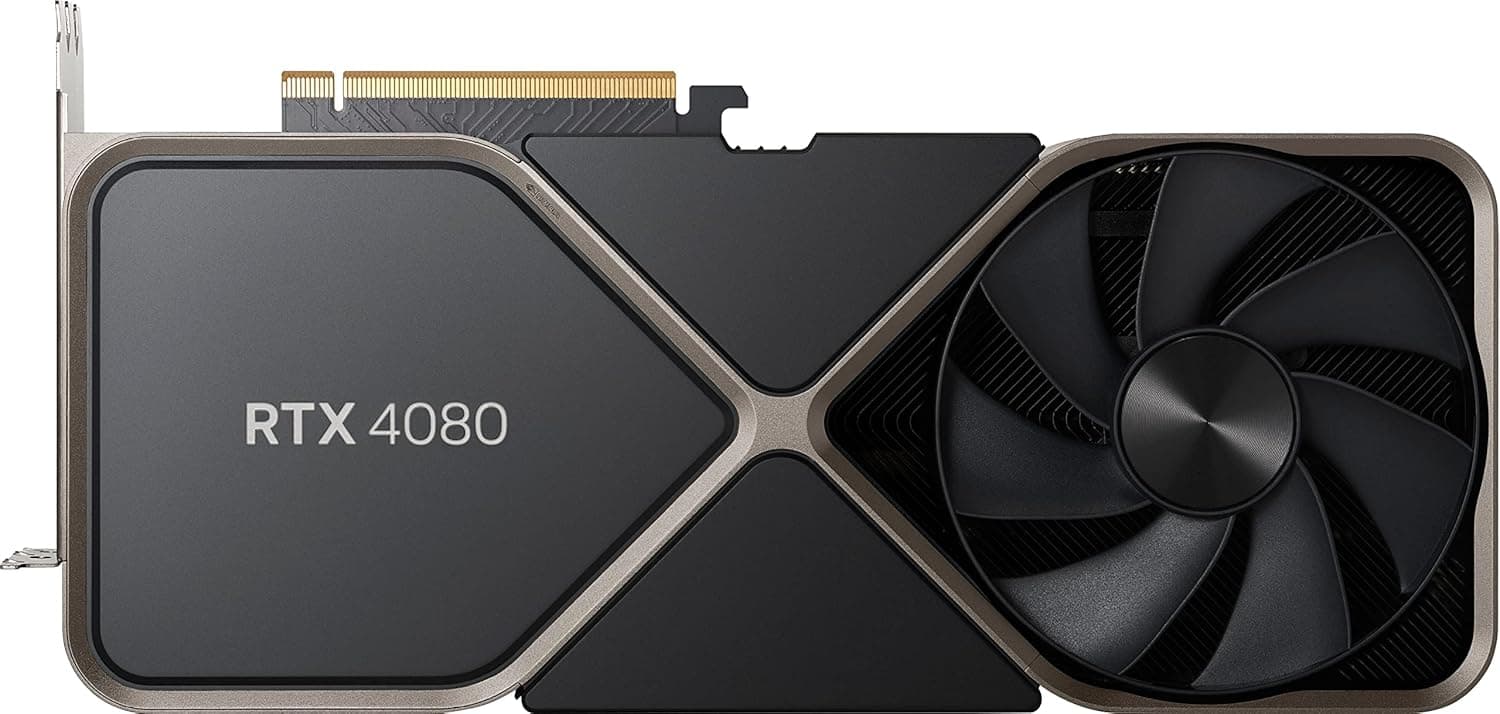
GeForce RTX 4080
avg, 1080p
The short answer
The RTX 4080 is a clear step up, about 36% faster on average, with 16 GB of VRAM against the 3080's 10 GB, and both cards draw the same 320 W to get there. This is a real generational leap, not a marginal one, so there's no need to dress it up as a close race. The 3080 still holds its own at 1440p and costs roughly a third as much on the used market. Buy the 4080 for genuine 4K performance, more VRAM, and DLSS 4 with AV1 encoding. Buy the 3080 if 1440p is your target and the price gap matters more than the extra speed.
This pairing is a genuine generational upgrade story, unlike some cross-gen matchups where the gap is smaller than expected. The RTX 4080 beats the RTX 3080 by a wide, honest margin, adds 6 GB more VRAM, and does it all at the exact same 320 W TDP. The real question isn't which card is faster, it clearly is the 4080, it's whether that 36% and 4K-readiness is worth close to three times the price.
Everything below breaks that 36% gap down further: full spec tables, per-game frame rates with 1% lows, ray tracing and DLSS 4 results, a CPU-pairing check, thermals, power draw at matching 320 W loads, and price history back to 2023, all pointing at the same question, is the extra roughly $470 worth it for the extra VRAM and speed.
At a glance
Seven dimensions, two cards. Bigger area is not automatically better, each card owns different corners.
Strengths radar
Each axis scored 0-100 relative to the pair
Performance vs price
Up and to the left is better value
Grey dots are neighbouring cards for context.
Which should you buy?
Pick your use case, the winner changes with what you actually do.
A real 36% average lead and 16 GB of VRAM make the 4080 the only one of these two built for native 4K.
The 3080 still handles 1440p well and costs roughly a third of the 4080's price, both new and used.
16 GB against 10 GB, plus far more raw compute, makes the 4080 the clearly better AI and rendering card.
A hardware AV1 encoder and DLSS 4 support come standard on the 4080, the 3080 has neither.
A 36% gain is real but expensive, keep the 3080 unless you specifically need 4K headroom or more VRAM.
The 3080 remains a strong, affordable way into serious 1440p performance if the 4080's price is out of reach.
Already own an RTX 3080? The 4080 is a real upgrade, if you can afford it.
Short answer: probably not
A 36% average gain with 6 GB more VRAM at the same power draw is a genuine step forward, unlike some cross-gen matchups where the newer card barely earns its price. If you are GPU-bound at 1440p or want to move to 4K, the 4080 delivers on that promise.
The catch is cost: at roughly $750 street versus $280 for the 3080, you are paying close to three times as much for that 36%. If your 3080 is running fine at 1440p, there's no urgency. Wait for further price drops, or consider a used 4070 Ti Super for a smaller, cheaper step up instead.
Full specification comparison
Every spec side by side. The highlighted figure wins each row.
| Specification | RTX 3080 | RTX 4080 |
|---|---|---|
| Architecture | ||
| GPU / architecture | GA102 · Ampere | AD103 · Ada |
| Process node | Samsung 8 nm | TSMC 4N (5 nm) ▲ |
| Release date | Sep 17, 2020 | Nov 16, 2022 |
| Launch MSRP | $699 ▲ | $1,199 |
| Compute | ||
| CUDA cores | 8,704 | 9,728 ▲ |
| RT cores | 68 · 2nd gen | 76 · 3rd gen ▲ |
| Tensor cores | 272 · 3rd gen | 304 · 4th gen ▲ |
| Base / boost clock | 1440 / 1710 MHz | 2205 / 2505 MHz ▲ |
| L2 cache | 5 MB | 64 MB ▲ |
| Memory | ||
| VRAM | 10 GB GDDR6X | 16 GB GDDR6X ▲ |
| Memory bus | 320-bit ▲ | 256-bit |
| Bandwidth | 760 GB/s ▲ | 716.8 GB/s |
| Power & form factor | ||
| TDP | 320 W | 320 W |
| Power connector | 2× 8-pin | 1× 16-pin (12VHPWR) |
| Suggested PSU | 750 W | 750 W |
| PCIe interface | 4.0 ×16 | 4.0 ×16 |
| Features | ||
| Upscaling | DLSS 2 / Super Res | DLSS 4 + Frame Gen ▲ |
| AV1 encode (NVENC) | No | Yes ▲ |
| Display outputs | 3×DP1.4a · HDMI 2.1 | 3×DP1.4a · HDMI 2.1 |
Average FPS by game
Switch resolution, metric, ray tracing and upscaling, the bars update live. Hover a bar for the avg / 1% / 0.1% breakdown.
Average FPS · 1080p · Rasterization. Representative data, hover a bar for avg / 1% / 0.1%. Note the RTX 4080's 1% lows fall off at 1440p and up from its 8 GB VRAM.
Smoothness & frametimes
Average FPS hides stutter. This is one run plotted as frametime, a flat line is smooth, spikes are hitches. Watch what the RTX 4080's 8 GB VRAM does in a texture-heavy game.
Frametime: Cyberpunk 2077, 4K Ultra + Ray Tracing
Lower and flatter is better · 16.7 ms = 60 fps
Counterintuitive but real: the slower RTX 3080 delivers a smoother line here because 12 GB holds the texture pool the 8 GB RTX 4080 keeps evicting, those spikes are VRAM stutter, not raw speed.
Lab scores
Clean apples-to-apples tests, useful, but weaker at predicting real games than the FPS above.
Ray tracing & upscaling
Ray tracing tanks both cards at native resolution. What makes it playable is upscaling, and here the RTX 4080 has a real edge.
Is frame generation "real" performance?
The RTX 3080 predates DLSS 3, Ampere has no Frame Generation hardware, so it renders every frame the traditional way. The RTX 4080 supports DLSS 3 single Frame Generation, inserting an AI-made frame between two real ones, which can push the counter well past 100 fps at 4K in supported titles and smooth motion on a high-refresh screen. Inserted frames don't react to input, so latency ticks up slightly, NVIDIA Reflex claws most of it back.
Use Frame Generation on the 4080 for single-player and cinematic games, especially at 4K with ray tracing on, and skip it for competitive shooters or when your base frame rate is under about 50 fps. The 3080 has no equivalent, so at native 4K with RT enabled it falls well behind what the 4080 can sustain.
Will your CPU bottleneck these cards?
A faster GPU only helps if your CPU keeps up. Pick your CPU and resolution to see expected FPS and bottleneck for each card.
CPU + GPU pairing check
The willitbottleneck engine, built right into the comparison.
Estimated from a 43-CPU model across 1440p. A weak CPU mostly bites at 1080p; at higher resolutions the GPU becomes the limiter and the bottleneck shrinks.
Thermals & noise
The efficiency gap shows up here: the newer card runs cooler and quieter, day in and day out.
Real draw, efficiency & PSU
TDP is the rated figure; what matters is real gaming draw and how many frames you get per watt.
Both use a single 8-pin connector. If your PSU already ran the RTX 3080, it will run the RTX 4080 easily. Leave about 30% headroom for spikes.
Will it fit, and what to pair it with?
Size to scale
Card length matters for small cases
What monitor to pair
RTX 3080: 1440p at 100 Hz and up, and a competent 4K card with DLSS in most titles. RTX 4080: native 4K at 60-100 Hz in the majority of current games, and a genuinely strong 1440p high-refresh card if you'd rather chase frame rate instead.
Running an older PCIe 3.0 board?
The RTX 3080 and RTX 4080 both run a full PCIe 4.0 ×16 link, so an older PCIe 3.0 board costs either card under 5%, not enough to change a buying decision. Neither one supports PCIe 5.0.
Price history & dollars-per-frame
Raw price is only half the story. Cost per frame is the number that decides it, and it keeps moving as prices fall.
New price over time
Street price of new cards (USD)
The 10 GB vs 16 GB question
RTX 3080 · 10 GB
- 760 GB/s of bandwidth is actually a hair higher than the 4080's, the wider 320-bit bus holds its own here.
- 10 GB is enough for the large majority of games at 1440p, the 3080's real target resolution.
- A much cheaper way into strong 1440p performance if 16 GB of headroom isn't something you need yet.
- At 4K, or with texture mods and modern AI work, 10 GB runs out well before the 4080's 16 GB does.
RTX 4080 · 16 GB
- 16 GB comfortably covers 4K gaming, texture mods, and serious local AI and creator work through 2026.
- 64 MB of L2 cache more than makes up for the narrower 256-bit bus in most real workloads.
- The extra headroom future-proofs the card well past where the 3080's 10 GB starts to show its age.
- Raw bandwidth is technically a touch below the 3080's, though the far larger cache erases the difference in practice.
Emulation & memory bandwidth
The narrower bus is a real downgrade for emulation
Bandwidth is close between these two, 760 GB/s on the 3080 against 716.8 GB/s on the 4080, so this comes down to capacity and compute rather than bus width. The 4080's 16 GB and much higher raw performance make it the stronger pick for the most demanding high-resolution emulation, though the 3080 remains capable at more modest internal resolutions.
Creator, AI & streaming
The newer card is quicker per task, but the older card's extra VRAM unlocks larger jobs it can't fit at all.
Streaming: the AV1 encoder is the differentiator
The RTX 4080 adds a hardware AV1 encoder the RTX 3080 does not have, Ampere tops out at H.264 and HEVC. AV1 delivers cleaner streams at the same bitrate and faster exports, a clear win for the 4080 on top of its raw speed advantage.
Overclocking & undervolting
Both cards run the same 320 W stock TDP and share similar undervolting upside, 25-35 W off either with minimal performance loss. The 4080's newer process gives it a small efficiency edge at any given voltage.
Pros & cons
RTX 3080
- About a third of the 4080's price, both new and used
- Strong 1440p performance that still holds up in 2026
- Slightly higher raw memory bandwidth thanks to its wider 320-bit bus
- 36% slower on average, and the gap widens further at 4K
- 10 GB VRAM and no DLSS 3 or 4 Frame Generation or AV1 encoder
RTX 4080
- About 36% faster with 16 GB VRAM, a real generational leap over the 3080
- DLSS 4 upscaling, DLSS 3 Frame Generation, plus hardware AV1 encoding
- Same 320 W TDP as the 3080 despite the large performance jump
- Costs roughly 2.7x the 3080's street price
- 16-pin 12VHPWR connector needs careful cable management
Buying pitfalls
Which RTX 3080 are you buying?
There is a common 10 GB (320-bit) version and a rarer 12 GB (384-bit) version. Everything on this page refers to the 10 GB card, check the box or spec sheet before buying used.
The 4080's 12VHPWR connector needs care
Like other Ada 40-series cards, the 4080's 16-pin connector should be pushed in fully and kept free of tight bends near the plug, to avoid the overheating issues reported on early 12VHPWR cables.
RTX 3080 vs RTX 4080: your questions answered
Yes, and it's not close. It's about 36% faster on average, carries 16 GB of VRAM against the 3080's 10 GB, and adds DLSS 4 plus AV1 encoding, all while drawing the same 320 W.
Get the 4080 if 4K or serious 1440p headroom is the goal and your budget stretches that far. Get the 3080 if 1440p is genuinely your target resolution and the roughly $470 price gap outweighs the extra speed.
Yes. It's still a strong 1440p card and a workable 4K card with DLSS in most titles. It's clearly outclassed by the 4080, but nowhere near outdated.
If you're GPU-bound at 1440p or want to move up to 4K, yes, this is one of the better cross-gen upgrades available, a genuine 36% gain plus 6 GB more VRAM. If your 3080 already keeps pace with your monitor, there's no rush.
The RTX 4080, and it's not a close call. 16 GB of VRAM against the 3080's 10 GB, plus far more raw compute and newer Tensor cores, gives it a decisive edge in local AI and rendering tasks.
The RTX 4080, thanks to its hardware AV1 encoder and extra VRAM for larger timelines. The 3080 has no AV1 encoder at all and 6 GB less memory to work with.
It supports DLSS 4 upscaling and DLSS 3 single Frame Generation, though not the multi-frame generation exclusive to the RTX 50 series. The RTX 3080 predates DLSS 3 entirely and only handles upscaling.
Both have dedicated RT cores, but the 4080's are a full generation newer and considerably quicker, especially at 4K, where the 3080 needs heavy DLSS help just to stay playable.
The 4080 is the more likely one to hit a CPU wall at 1080p, since it's the faster card. Check the pairing tool on this page, a Ryzen 7 7700X or Core i7-13700K class chip and up keeps the 4080 fed at 1440p and 4K.
Both pull the same 320 W, but the 4080's newer process and typically bigger cooler keep it noticeably cooler and quieter under load than the 3080.
A quality 750 W unit covers either card, since they share the same TDP. Step up to 850 W if you're also running a power-hungry CPU or want extra headroom.
The 3080 measures about 285 mm and 2 slots, the 4080 is bigger at around 304 mm and 3 slots, check your case's clearance either way. On a PCIe 3.0 board, either card loses under 5%, not something to worry about.
No. The laptop RTX 4080 is a separate, considerably weaker chip with a lower power budget. Never line up laptop and desktop numbers directly, use the mobile version of this comparison instead.
The 4080 is a genuine native 4K card in most current titles. The 3080 can do 4K too, but it leans much more heavily on DLSS to stay smooth in demanding, texture-heavy games.
The RTX 3080 is used-market only at this point, and it's the stronger value here. The RTX 4080 can still be found new in some markets, worth paying for if you want the warranty plus the extra performance and VRAM.
Years still. Both Ampere and Ada continue to get full Game Ready driver support from NVIDIA, so neither is an end-of-life concern for a 2026 purchase.