
Ryzen 9 5900X vs Ryzen 7 5800X
The complete head-to-head: full specs, real 1080p gaming fps with 1% lows, productivity benchmarks, a live GPU-bottleneck check, power, platform cost and a straight verdict.
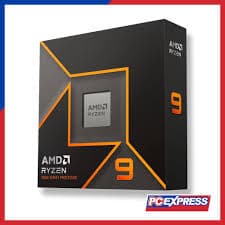
Ryzen 9 5900X
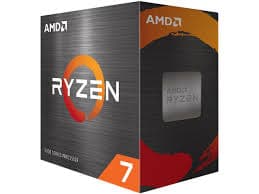
Ryzen 7 5800X
gaming, 1080p
The short answer
This is the counterintuitive pairing in the Ryzen 5000 lineup: the 12-core Ryzen 9 5900X does not actually win at gaming. The 8-core Ryzen 7 5800X edges it out by about 2%, because the 5900X splits its cores across two separate compute dies, and the small latency penalty of talking between them costs a little more than the extra cores gain in most games. Where the 5900X dominates is productivity, its 12 cores and 24 threads pull far ahead of the 5800X in Cinebench and Blender. Buy the 5900X for real multi-core work, buy the 5800X if gaming is the priority and you want to save $65 in the process.
Both chips launched together in November 2020 as Zen 3 flagships on AM4, both run at the same 105 W TDP, and both are still capable performers in 2026. The Ryzen 9 5900X is the bigger chip, 12 cores and 24 threads split across two compute die complexes (CCDs) for a combined 70 MB of cache. The Ryzen 7 5800X keeps everything on a single CCD with 8 cores, 16 threads, and 36 MB of cache, no cross-die communication required.
That structural difference is the whole story here. More cores usually means more performance, but gaming does not scale well past six to eight cores, and the 5900X's dual-CCD design adds a small latency cost that single-CCD chips avoid. Full specs, 1080p gaming fps, productivity scores, a GPU-bottleneck checker, power draw, and a plain verdict follow below.
At a glance
Six dimensions, two chips. Each owns different corners, bigger area is not automatically better.
Strengths radar
Each axis scored 0-100 relative to the pair
Gaming vs price
Up and to the left is better value
Grey dots are neighbouring chips for context.
Which should you buy?
Pick your use case, the winner changes with what you actually do.
The 5800X's single CCD avoids the small cross-die penalty the 5900X pays, and it costs $65 less to get there.
12 cores and 24 threads give the 5900X a large, consistent lead in every multi-threaded workload here.
If you regularly render or compile alongside gaming, the 5900X's extra cores pay for themselves quickly.
Faster in games and cheaper, the 5800X is the more sensible pick if gaming is the main use case.
The extra four cores give the 5900X real headroom for software x264 encoding without touching game performance.
Fewer cores to manage, slightly better gaming result, and less money spent on a chip that would sit half-idle.
Building for gaming only? Skip the 5900X.
Read this before you spend
If gaming is genuinely your main use, the 5900X offers nothing here, it is both slower and pricier than the 5800X in that scenario. Its extra cores go largely unused in games and even introduce a small latency cost from the dual-CCD design. Save the $65 and buy the 5800X, or put that money toward the GPU instead.
If you render video, compile large codebases, or run other heavily multi-threaded workloads alongside gaming, the equation flips completely. The 5900X's 12 cores deliver a real, large productivity advantage that the 5800X simply cannot match, and that is worth paying for.
Full specification comparison
Every spec side by side. The highlighted figure wins each row.
| Specification | Ryzen 9 5900X | Ryzen 7 5800X |
|---|---|---|
| Architecture | ||
| Architecture | Zen 3 | Zen 3 |
| Process node | TSMC 7 nm | TSMC 7 nm |
| Release date | Nov 2020 | Nov 2020 |
| Launch MSRP | $549 | $449 ▲ |
| Cores & clocks | ||
| Cores / threads | 12 / 24 ▲ | 8 / 16 |
| Compute dies (CCDs) | 2 | 1 |
| Base / boost clock | 3.7 / 4.8 GHz | 3.8 / 4.7 GHz |
| Cache & memory | ||
| L3 cache | 64 MB ▲ | 32 MB |
| Total cache | 70 MB ▲ | 36 MB |
| Memory support | DDR4-3200 | DDR4-3200 |
| Platform & power | ||
| Socket | AM4 | AM4 |
| TDP | 105 W | 105 W |
| PCIe generation | PCIe 4.0 | PCIe 4.0 |
| Bundled cooler | None | None |
Gaming FPS by game
Tested at 1080p with a top GPU so the processor is the limit. Switch resolution and metric, the bars update live.
Average FPS at 1080p, paired with a top-tier GPU so the processor is the limit. The gap between these two chips is widest at 1080p and shrinks as resolution rises and the GPU takes over.
Cache, clocks and 1% lows
Why the cache and clock balance decides the gaming feel
Neither chip has 3D V-Cache, but this pair is the clearest example in the whole lineup of why more cores and more total cache do not automatically win games. The 5900X's 64 MB of L3 is split into two 32 MB pools, one per CCD, and a game thread that needs data sitting in the other CCD's cache pays a real latency penalty crossing the Infinity Fabric link between them.
The 5800X keeps its entire 32 MB of L3 on a single CCD that every core can reach with the same low latency. That structural simplicity is worth a couple of percent in games, enough to edge out a chip with 50% more cores and nearly double the total cache. It flips completely in productivity, where the 5900X's extra cores overwhelm any latency cost.
Productivity & content creation
Rendering, encoding and compiling lean on cores and threads more than games do, so the ranking can flip here.
Streaming and content work
This is where the 5900X's extra cores earn their keep. Streaming with software x264 encoding while gaming leans heavily on spare CPU threads, and the 5900X has far more of them to spare than the 5800X, with almost no cost to game frame rates. If you stream seriously and use CPU-based encoding, the 5900X is the better chip despite its small gaming deficit.
Will these CPUs bottleneck your GPU?
A faster CPU only helps if your graphics card needs the frames. Pick your GPU and resolution to see expected fps and any bottleneck for each chip.
Will these CPUs bottleneck your GPU?
The willitbottleneck engine, built right into the comparison.
Estimated across a 17-GPU model at 1080p. A CPU only bottlenecks at 1080p with a fast GPU; push to higher resolutions and the GPU becomes the limit, so the bottleneck shrinks or disappears.
Both are strong gaming chips that comfortably feed a mid-range GPU at 1080p and above. Paired with a genuinely high-end card like an RTX 5080 or 5090 at 1080p, the 5800X's small single-CCD advantage becomes marginally more visible, but neither chip is a serious bottleneck for most builds.
At 1440p and 4K, the graphics card is overwhelmingly the limiting factor for either chip, and the 2% gaming gap between them disappears into noise. Choose based on productivity needs at those resolutions, not gaming.
Power draw, heat & cooler needs
What the chip actually pulls under load, how hot it runs, and the cooler you should budget for.
Platform, motherboard & memory
The chip price is only part of it. Socket, board cost, memory type and upgrade path decide the real bill.
Socket & upgrade path
Both use the AM4 socket and DDR4 memory. A B550 board around $70 to $90 works for the 5800X; the 5900X's higher sustained current draw under full multi-core load makes a board with a stronger VRM worth the extra cost, especially if you plan to run it at full tilt for rendering. AM4 itself is a closed platform now with no further CPU releases planned.
Memory: DDR4 vs DDR5
Both officially support DDR4-3200, and a 3200 to 3600 MT/s CL16 kit is the practical sweet spot for either. The 5900X's dual-CCD design is slightly more sensitive to memory latency than the 5800X's single CCD, so a tighter-timing kit gives it a small additional benefit if you already own one.
Price history & dollars-per-frame
Raw price is half the story. Cost per gaming frame is the number that decides it, and it keeps moving as prices fall.
Price over time
Street price of each chip (USD)
Overclocking & tuning
Both chips have unlocked multipliers, but neither has much single-core overclocking headroom left at stock, they already boost close to their silicon limits from AMD. PBO tuning with a negative Curve Optimizer offset is the more effective lever for both, trimming voltage for lower temperatures and occasionally a small clock gain, particularly useful on the 5900X to tame its higher heat output under full load.
Pros & cons
Ryzen 9 5900X
- 12 cores and 24 threads, roughly 45% ahead in Cinebench multi
- Far faster in rendering, video export, and compiling
- Real headroom for software encoding while gaming
- Actually 2% slower in games than the cheaper 5800X
- Costs $65 more and runs hotter under full load
Ryzen 7 5800X
- Slightly faster in games thanks to its single-CCD design
- $65 cheaper and a bit easier to cool
- The better buy if gaming is genuinely your only use case
- Far behind in any real multi-threaded workload
- Only 8 cores if you later want more for productivity
Buying pitfalls
Do not buy the 5900X for gaming alone
If gaming is your only use case, the 5900X is both slower and $65 more expensive than the 5800X here. Its extra cores go unused and its dual-CCD design costs it a small amount of gaming performance. Buy it only if you have a genuine multi-threaded workload to justify the cores.
Neither chip includes a cooler, and the 5900X wants a good one
Both are 105 W parts with no bundled cooler. The 5900X's 12 active cores under full load push more sustained heat than the 5800X, so a 240mm AIO or a strong dual-tower air cooler is worth the investment if you plan to use those extra cores regularly.
Ryzen 9 5900X vs Ryzen 7 5800X: your questions answered
It depends entirely on what you do. For gaming, no, the 5800X is actually about 2% faster and $65 cheaper. For rendering, encoding, or compiling, the 5900X's 12 cores give it a large, decisive lead. Match the chip to your workload, not the model number.
The 5900X splits its 12 cores across two separate compute dies (CCDs), each with its own 32 MB L3 cache pool. When a game thread needs data from the other CCD, it pays a small latency penalty crossing the connection between them. The 5800X keeps everything on one CCD, avoiding that penalty entirely, which is enough to edge out the bigger chip in games.
Buy the 5800X if gaming is your main use, it is faster there and cheaper. Buy the 5900X if you regularly render video, compile large projects, or run other heavily multi-threaded work, where its 12 cores deliver a large, real advantage.
Roughly 45% ahead in Cinebench 2024 multi-core and about 30% faster in the Blender BMW render test. This is not a marginal gap, if you do real multi-threaded work the 5900X earns its higher price back quickly.
No. In this exact pairing, the 5800X is both faster in games and $65 cheaper. The 5900X's extra cores go largely unused in games, and its dual-CCD design even costs it a small amount of performance there.
The 5900X, if you use software x264 encoding while gaming. Its extra cores handle the encoding load with almost no impact on game frame rates, something the 5800X's eight cores feel more of. If you stream with GPU-based NVENC or AV1 encoding instead, the difference matters much less.
Rarely, both are capable gaming chips. With a flagship GPU like an RTX 5090 at 1080p, the 5800X's small edge is marginally more visible. At 1440p and 4K the graphics card is the dominant factor for either chip, and the gap between them disappears.
Yes, ideally. Both are 105 W parts with no bundled cooler, but the 5900X's 12 active cores generate more sustained heat under full multi-core load. A 240mm AIO or a strong dual-tower air cooler is a worthwhile investment if you plan to actually use those cores for rendering or compiling.
Both use AM4 and DDR4. A B550 board around $70 to $90 suits the 5800X. For the 5900X, a board with a stronger VRM is worth the extra cost if you will run it at sustained full load. A 3200 to 3600 MT/s CL16 DDR4 kit works well for either.
Both have unlocked multipliers, but neither has much headroom left at stock clocks. PBO tuning with a negative Curve Optimizer offset is more effective than a manual overclock for both, and it particularly helps tame the 5900X's higher heat under full load.
Both are common on the used AM4 market. A used 5800X around $120 is the sharper deal for gaming-focused builds. A used 5900X around $175 still makes sense if you need the cores, since new stock of either chip is increasingly limited in 2026.
Essentially tied. At 4K the graphics card is overwhelmingly the limiting factor for either chip, so the small gaming gap between them disappears. If you game mainly at 4K and also need productivity performance, the 5900X becomes the clearly better all-around pick.
Yes, the Ryzen 7 5800X3D beats both of these chips outright in games thanks to its large 3D V-Cache, while still trailing the 5900X in heavy multi-threaded work. It is the chip to consider if gaming is the priority and you can spend a bit more.
Mainly if you already own AM4 parts or need a proven, affordable platform. AM4 has no further CPU releases planned by AMD. Either chip remains a solid, capable option on it, especially for someone who values raw cores per dollar on the used market.
A quality 650 W PSU comfortably covers either chip paired with a mid-to-high-end GPU. The 5900X's sustained full-load draw is a little higher under heavy multi-core work, so err toward the higher end of that range if you use it for rendering regularly.
No, neither has usable integrated graphics. Both require a discrete GPU to output a display, unlike AMD's separate G-series APUs.