
GTX 970 vs GTX 1060 6GB
The complete head-to-head: full specs, real per-game FPS with 1% lows, ray tracing, a live CPU-bottleneck check, thermals, power and value, with a straight verdict.
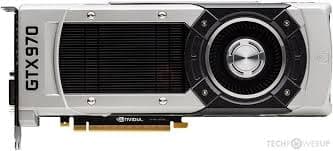
GeForce GTX 970
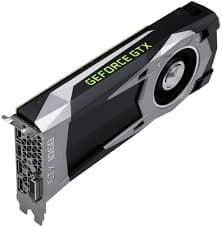
GeForce GTX 1060
avg, 1080p
The short answer
The GTX 1060 6GB wins this one, about 10% faster on average, 25 watts cooler, and it carries a clean, full-speed 6 GB pool instead of the GTX 970's infamous 3.5 GB fast plus 0.5 GB slow split. That gap widens further in modern, VRAM-heavy titles where the 970's memory partition becomes an actual bottleneck rather than just a spec-sheet footnote. Both are deeply budget cards in 2026, but if the price difference is small, the 1060 is the straightforwardly better buy.
This is a two-generation-apart, similar-price comparison that comes up constantly in budget and hand-me-down builds. The GTX 970 was Maxwell's breakout budget-flagship in 2014, famous for great performance per dollar at launch and, later, for the discovery that its 4 GB of VRAM wasn't really 4 GB of equal-speed memory. The GTX 1060 6GB followed two years later as Pascal's mainstream card, cleaner architecture, no memory controversy, and a genuinely efficient design.
The frame rate tables below matter less here than the memory story: real 1080p benchmarks for both, why the 970's segmented pool shows up in modern titles, thermals, power draw, price trends, and a verdict built around that VRAM issue specifically.
At a glance
Seven dimensions, two cards. Bigger area is not automatically better, each card owns different corners.
Strengths radar
Each axis scored 0-100 relative to the pair
Performance vs price
Up and to the left is better value
Grey dots are neighbouring cards for context.
Which should you buy?
Pick your use case, the winner changes with what you actually do.
10% faster on average, and the gap grows further in newer titles that push past the 970's usable memory ceiling.
In games that stay under 3.5 GB VRAM, the 970 is still a perfectly usable, very cheap 1080p card.
Neither is a real AI card, but the 1060's clean 6 GB pool and current CUDA driver support make it the far less frustrating choice.
Pascal's NVENC encoder is a step up from Maxwell's for stream quality and export speed at the same bitrate.
120 W against 145 W, plus better performance per watt across the board, an easy call for a compact build.
At around $45 used, the GTX 970 is the cheapest entry point here if you can live with its memory quirk.
Own a GTX 970? The GTX 1060 is a modest but genuinely clean upgrade.
Short answer: probably not
A 10% average gain isn't dramatic, but it comes with a real quality-of-life improvement: no more 3.5+0.5 GB memory partition to work around, and no more frame-time spikes when a game's VRAM usage creeps past 3.5 GB at 1080p high settings. If you're seeing stutter in modern titles on a 970, that's very likely the memory split, not raw GPU horsepower, and the 1060 fixes it directly.
If you already own a GTX 1060, don't bother stepping down to a 970, it's a straight downgrade with the memory issue attached. Put money toward an RTX 3050 or 3060 instead for a real generational jump with ray tracing and DLSS included.
Full specification comparison
Every spec side by side. The highlighted figure wins each row.
| Specification | GTX 970 | GTX 1060 6GB |
|---|---|---|
| Architecture | ||
| GPU / architecture | GM204-200 · Maxwell 2nd gen | GP106-400 · Pascal |
| Process node | TSMC 28 nm | TSMC 16 nm ▲ |
| Release date | Sep 19, 2014 | Jul 19, 2016 |
| Launch MSRP | $329 | $249 ▲ |
| Compute | ||
| CUDA cores | 1,664 ▲ | 1,280 |
| RT cores | None | None |
| Tensor cores | None | None |
| Base / boost clock | 1050 / 1178 MHz | 1506 / 1708 MHz ▲ |
| L2 cache | 1.75 MB ▲ | 1.5 MB |
| Memory | ||
| VRAM | 4 GB GDDR5 (3.5+0.5) | 6 GB GDDR5 ▲ |
| Memory bus | 256-bit (segmented) | 192-bit |
| Bandwidth | 224 GB/s (rated) ▲ | 192 GB/s |
| Power & form factor | ||
| TDP | 145 W | 120 W ▲ |
| Power connector | 2× 6-pin | 1× 6-pin |
| Suggested PSU | 500 W | 400 W ▲ |
| PCIe interface | 3.0 ×16 | 3.0 ×16 |
| Features | ||
| Upscaling | None (FSR 1/2 only) | None (FSR 1/2 only) |
| AV1 encode | No | No |
| Display outputs | 3×DP1.2 · HDMI2.0 · DVI-I | 3×DP1.4 · HDMI2.0b · DVI-D ▲ |
Average FPS by game
Switch resolution, metric, ray tracing and upscaling, the bars update live. Hover a bar for the avg / 1% / 0.1% breakdown.
Average FPS · 1080p · Rasterization. Representative data, hover a bar for avg / 1% / 0.1%. Note the GTX 1060 6GB's 1% lows fall off at 1440p and up from its 8 GB VRAM.
Smoothness & frametimes
Average FPS hides stutter. This is one run plotted as frametime, a flat line is smooth, spikes are hitches. Watch what the GTX 1060 6GB's 8 GB VRAM does in a texture-heavy game.
Frametime: Hogwarts Legacy, 1080p Ultra
Lower and flatter is better · 16.7 ms = 60 fps
Counterintuitive but real: the slower GTX 970 delivers a smoother line here because 12 GB holds the texture pool the 8 GB GTX 1060 6GB keeps evicting, those spikes are VRAM stutter, not raw speed.
Lab scores
Clean apples-to-apples tests, useful, but weaker at predicting real games than the FPS above.
Ray tracing & upscaling
Ray tracing tanks both cards at native resolution. What makes it playable is upscaling, and here the GTX 1060 6GB has a real edge.
Is frame generation "real" performance?
Neither card supports frame generation. DLSS 3 needs RTX 40-series Tensor cores that neither Maxwell nor Pascal ever had, and AMD's more hardware-open FSR 3 frame-gen would offer little benefit on GPUs this old and this VRAM-constrained, it would mostly add latency without a real payoff.
Focus on lowering settings for a stable base frame rate on either card rather than looking for any form of frame interpolation, that feature simply doesn't exist at this hardware tier.
Will your CPU bottleneck these cards?
A faster GPU only helps if your CPU keeps up. Pick your CPU and resolution to see expected FPS and bottleneck for each card.
CPU + GPU pairing check
The willitbottleneck engine, built right into the comparison.
Estimated from a 43-CPU model across 1440p. A weak CPU mostly bites at 1080p; at higher resolutions the GPU becomes the limiter and the bottleneck shrinks.
Thermals & noise
The efficiency gap shows up here: the newer card runs cooler and quieter, day in and day out.
Real draw, efficiency & PSU
TDP is the rated figure; what matters is real gaming draw and how many frames you get per watt.
Both use a single 8-pin connector. If your PSU already ran the GTX 970, it will run the GTX 1060 6GB easily. Leave about 30% headroom for spikes.
Will it fit, and what to pair it with?
Size to scale
Card length matters for small cases
What monitor to pair
GTX 970: fine at 1080p 60-75 Hz in games that stay under its 3.5 GB fast VRAM pool, gets shakier past that. GTX 1060: similar 1080p 60-75 Hz range with fewer VRAM-driven surprises. Neither is a 1440p card by 2026 standards, and 4K isn't realistic on either.
Running an older PCIe 3.0 board?
Both the 970 and the 1060 top out at PCIe 3.0 x16, and both are far too slow to ever ask that link for more bandwidth than it gives. A PCIe 4.0 or 5.0 motherboard changes nothing for either card.
Price history & dollars-per-frame
Raw price is only half the story. Cost per frame is the number that decides it, and it keeps moving as prices fall.
New price over time
Street price of new cards (USD)
The 4 GB (3.5+0.5) vs 6 GB question
GTX 970 · 4 GB (3.5+0.5)
- 3.5 GB of full-speed memory is enough for most games at 1080p medium-high settings, well below the partition boundary.
- The last 0.5 GB of the advertised 4 GB runs at a fraction of the main pool's bandwidth, a genuine, well-documented hardware limitation, not a myth.
- Modern titles at 1080p ultra with high-res texture packs can push past 3.5 GB and trigger visible frame-time spikes and stutter.
- No practical fix exists for this, it's baked into the memory controller design, only lower settings avoid it.
GTX 1060 6GB · 6 GB
- A clean, full-speed 6 GB pool with no partition quirk, every gigabyte behaves the same.
- Comfortably covers 1080p high-ultra settings in the large majority of current games without the stutter risk the 970 carries.
- Still only 6 GB, some very demanding modern titles at max settings can approach that ceiling too.
- Neither card has the compute to make heavy use of a larger pool anyway, this is a durability edge more than a performance one.
Emulation & memory bandwidth
The narrower bus is a real downgrade for emulation
The GTX 970's rated 224 GB/s bandwidth looks competitive with the GTX 1060's 192 GB/s on paper, but its segmented memory design means high-resolution emulation workloads that push past 3.5 GB can hit the slow 0.5 GB partition and stutter, something the 1060's clean 6 GB pool never runs into. For serious high-resolution Switch or PS3 emulation, the 1060 is the more predictable choice despite its lower peak bandwidth number.
Creator, AI & streaming
The newer card is quicker per task, but the older card's extra VRAM unlocks larger jobs it can't fit at all.
Streaming: the AV1 encoder is the differentiator
Pascal's NVENC encoder on the GTX 1060 is a clear step up from the Maxwell-generation encoder in the GTX 970 for stream quality at a given bitrate, and it's better supported by current OBS and editing software. Neither has AV1, that's years away from either architecture.
Overclocking & undervolting
Both cards have modest, similar overclocking headroom, typically 8-10%, since they're older, mature architectures with little voltage room left to exploit. Neither responds dramatically to undervolting either, these aren't power-hungry enough at their stock TDPs for it to matter much.
Pros & cons
GTX 970
- The cheapest entry point of the two
- Strong rated bandwidth for its 3.5 GB fast pool
- Perfectly usable for older or lighter titles at 1080p
- The well-documented 3.5+0.5 GB memory partition
- 10% slower on average, hotter, and louder
GTX 1060 6GB
- 10% faster on average with a clean, full-speed 6 GB pool
- 25 W lower power draw, cooler and quieter
- Better encoder and current driver support
- Still only 6 GB by modern standards
- A separate, weaker 3GB version exists and is easy to mix up
Buying pitfalls
The GTX 970's real VRAM is 3.5 GB, not 4 GB
NVIDIA's spec sheet says 4 GB, but the memory controller splits it into a fast 3.5 GB pool and a much slower 0.5 GB pool due to a disabled crossbar segment. Push past 3.5 GB in a demanding modern title and you'll see real frame-time spikes, this is a well-documented hardware limitation from a 2015 controversy, not exaggerated internet lore.
There's also a GTX 1060 3GB, a genuinely different card
The 3GB GTX 1060 isn't just a smaller-memory version of the 6GB card, it also has fewer CUDA cores (1,152 versus 1,280), making it measurably slower on top of the reduced VRAM. Every number on this page is for the 6GB version. Confirm the listing specifies 6GB before buying used.
GTX 970 vs GTX 1060 6GB: your questions answered
Yes, in every practical way. It's about 10% faster on average, runs 25 watts cooler, and carries a clean 6 GB VRAM pool without the 970's well-known 3.5+0.5 GB memory split.
Close to one. Buy the GTX 1060 6GB unless the price gap to a GTX 970 is large, the clean memory pool alone is worth a small premium since it avoids real stutter in modern titles. Only buy the 970 as the absolute cheapest option.
Both are entry-level 1080p cards at this point, fine for esports titles and older or lighter games at medium settings, but both show their age in demanding modern AAA titles. Treat either as a stopgap.
The card is advertised with 4 GB of VRAM, but a disabled segment of the memory controller means the last 0.5 GB runs far slower than the first 3.5 GB. In games that stay under 3.5 GB it's invisible, past that boundary it causes real stutter. This is a confirmed hardware characteristic, not a rumor.
It compounds the same issue. Neither is a real AI card, but the GTX 1060 is the far less frustrating choice, its clean VRAM pool and current CUDA driver stack matter more than the 970's segmented, harder-to-predict memory behavior.
Yes. Pascal's NVENC encoder on the GTX 1060 is a clear step up from the 970's Maxwell-generation encoder for stream quality and export speed at the same bitrate.
Effectively, yes. Neither has dedicated RT hardware. The GTX 1060, being Pascal, can use a slow 2019 software DXR fallback, unusable in practice, while the GTX 970's older Maxwell architecture doesn't support even that.
Not DLSS, neither has Tensor cores. Both can use FSR 1 and FSR 2, which are shader-based and work on any DX11/12 card, but neither supports frame generation.
No, at this performance tier almost any CPU from the last decade keeps up. A budget quad-core from 2016 onward won't meaningfully hold either card back at 1080p.
Separately from the VRAM issue, the 970 simply runs hotter, about 148 W under gaming load against the GTX 1060's 120 W. That gap shows up directly in temperature and fan noise, the 1060 runs noticeably cooler and quieter.
Yes. A solid 500 W unit covers the GTX 970 comfortably, while the GTX 1060 is more forgiving, a 400 W unit is generally enough. Either way, don't cheap out on the power supply itself.
Barely. Reference GTX 970 cards run about 246 mm, GTX 1060 Founders Edition cards about 250 mm, check your case clearance either way. Both use a full PCIe 3.0 x16 link, so an older motherboard costs you nothing.
Not directly. The GTX 970M is a distinct, weaker mobile part, not a rebadge of the desktop 970. The GTX 1060 Mobile is closer in performance to its desktop counterpart, but still not identical, don't mix laptop and desktop numbers.
No. Both are strictly 1080p cards by 2026 standards, and even 1440p is a stretch in demanding modern titles on either. Don't buy either with any higher resolution in mind.
Yes, both are used-market-only at this point. Buy from a seller with a return window, ask for a stress-test screenshot, and avoid cards with obvious wear like caked dust or a poorly reapplied cooler, these are over a decade old.
Not yet, both still receive security and compatibility updates as of 2026, but neither will gain new features going forward, and support for architectures this old continues to narrow each year as new games and driver branches drop compatibility.