
GTX 1070 vs RX 580
The complete head-to-head: full specs, real per-game FPS with 1% lows, ray tracing, a live CPU-bottleneck check, thermals, power and value, with a straight verdict.
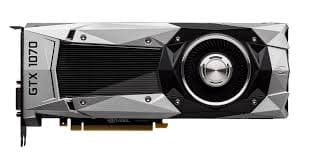
GeForce GTX 1070
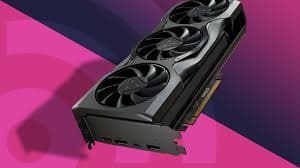
Radeon RX 580
avg, 1080p
The short answer
This isn't close. The GTX 1070 was a genuine high-end card in 2016 and it still shows, averaging about 39% faster than the RX 580 across the same test suite, while also drawing less power. Both carry 8 GB of VRAM on a 256-bit bus, so memory capacity is a wash, this comparison is really about how much extra speed the 1070's much larger die buys you. If the price gap between a used 1070 and a used RX 580 is anything less than double, the 1070 is the easy pick.
These two came from different tiers of the same generation. The GTX 1070 launched as NVIDIA's second-tier flagship at $379, built to compete with cards well above the RX 580's $229 mid-range slot. Years later they both live in the same used-market price bracket that budget buyers shop in, which is exactly why this comparison keeps coming up, on paper they look close, in practice they aren't.
The rest of the page pits Nvidia's 1440p-capable Pascal card against AMD's 8 GB Polaris workhorse, with full specs, ten-game benchmarks, power draw, price history, and a straight verdict.
At a glance
Seven dimensions, two cards. Bigger area is not automatically better, each card owns different corners.
Strengths radar
Each axis scored 0-100 relative to the pair
Performance vs price
Up and to the left is better value
Grey dots are neighbouring cards for context.
Which should you buy?
Pick your use case, the winner changes with what you actually do.
A 39% average lead is a full tier of performance, not a marginal edge, the 1070 plays current games meaningfully better.
The 1070 was built as a 1440p card at launch and still holds a usable frame rate there on high, not ultra, settings.
Same VRAM pool as the 580 but nearly 40% more compute and a far more usable CUDA driver stack.
NVENC on Pascal is a clear step up from Polaris's VCE encoder for stream quality and export speed.
150 W against 185 W, plus more performance per watt across the board, an easy call for a compact build.
If the 1070 costs more than roughly double the RX 580, the 580 is still a functional, cheap way into 1080p gaming.
Own an RX 580? A used GTX 1070 is a real, worthwhile jump.
Short answer: probably not
A 39% average gain is a legitimate upgrade, not a sidegrade, and you're not giving up any VRAM to get it since both cards carry 8 GB on the same 256-bit-class bus. If you can find a clean used 1070 for under about $130, it's one of the better dollar-per-frame upgrades available for an existing RX 580 owner.
If you already own a GTX 1070, don't bother with an RX 580, it's a straight downgrade in every category that matters. Put money toward an RTX 3050 or 3060 instead if you want a real generational leap with ray tracing and DLSS included.
Full specification comparison
Every spec side by side. The highlighted figure wins each row.
| Specification | GTX 1070 | RX 580 |
|---|---|---|
| Architecture | ||
| GPU / architecture | GP104-200 · Pascal | Polaris 20 XT · GCN 4 |
| Process node | TSMC 16 nm | GF/Samsung 14 nm ▲ |
| Release date | Jun 10, 2016 | Apr 18, 2017 |
| Launch MSRP | $379 | $229 ▲ |
| Compute | ||
| CUDA cores / stream processors | 1,920 | 2,304 SP ▲ |
| RT cores | None | None |
| Tensor cores | None | None |
| Base / boost clock | 1506 / 1683 MHz ▲ | 1257 / 1340 MHz |
| L2 cache | 2 MB | 2 MB |
| Memory | ||
| VRAM | 8 GB GDDR5 | 8 GB GDDR5 |
| Memory bus | 256-bit | 256-bit |
| Bandwidth | 256 GB/s | 256 GB/s |
| Power & form factor | ||
| TDP | 150 W ▲ | 185 W |
| Power connector | 1× 8-pin | 1× 6-pin + 1× 8-pin |
| Suggested PSU | 500 W | 500 W |
| PCIe interface | 3.0 ×16 | 3.0 ×16 |
| Features | ||
| Upscaling | FSR 1/2 (no DLSS) | FSR 1/2 (no dedicated HW) |
| AV1 encode | No | No |
| Display outputs | 3×DP1.4 · HDMI2.0b · DVI-D | DVI-D · HDMI2.0b · 3×DP1.4 |
Average FPS by game
Switch resolution, metric, ray tracing and upscaling, the bars update live. Hover a bar for the avg / 1% / 0.1% breakdown.
Average FPS · 1080p · Rasterization. Representative data, hover a bar for avg / 1% / 0.1%. Note the RX 580's 1% lows fall off at 1440p and up from its 8 GB VRAM.
Smoothness & frametimes
Average FPS hides stutter. This is one run plotted as frametime, a flat line is smooth, spikes are hitches. Watch what the RX 580's 8 GB VRAM does in a texture-heavy game.
Frametime: Hogwarts Legacy, 1080p Ultra
Lower and flatter is better · 16.7 ms = 60 fps
Counterintuitive but real: the slower GTX 1070 delivers a smoother line here because 12 GB holds the texture pool the 8 GB RX 580 keeps evicting, those spikes are VRAM stutter, not raw speed.
Lab scores
Clean apples-to-apples tests, useful, but weaker at predicting real games than the FPS above.
Ray tracing & upscaling
Ray tracing tanks both cards at native resolution. What makes it playable is upscaling, and here the RX 580 has a real edge.
Is frame generation "real" performance?
Neither card supports frame generation. DLSS 3 needs RTX 40-series Tensor cores that Pascal never had, and while AMD's FSR 3 frame-gen component is more hardware-open than DLSS, the RX 580's shader throughput is too limited to make it worthwhile, it mostly adds latency without a real payoff.
If smoother motion at a low base frame rate is the goal, that's a reason to look at a current-generation card, not a reason to pick between these two.
Will your CPU bottleneck these cards?
A faster GPU only helps if your CPU keeps up. Pick your CPU and resolution to see expected FPS and bottleneck for each card.
CPU + GPU pairing check
The willitbottleneck engine, built right into the comparison.
Estimated from a 43-CPU model across 1440p. A weak CPU mostly bites at 1080p; at higher resolutions the GPU becomes the limiter and the bottleneck shrinks.
Thermals & noise
The efficiency gap shows up here: the newer card runs cooler and quieter, day in and day out.
Real draw, efficiency & PSU
TDP is the rated figure; what matters is real gaming draw and how many frames you get per watt.
Both use a single 8-pin connector. If your PSU already ran the GTX 1070, it will run the RX 580 easily. Leave about 30% headroom for spikes.
Will it fit, and what to pair it with?
Size to scale
Card length matters for small cases
What monitor to pair
GTX 1070: solid at 1080p 100+ Hz, and a genuinely usable 1440p 60-75 Hz card on high settings. RX 580: best kept to 1080p 60-75 Hz, 1440p asks too much of it in current titles. Neither is a realistic 4K purchase.
Running an older PCIe 3.0 board?
Both cards run a full PCIe 3.0 ×16 link, so there's no lane-width penalty on either side, and neither benefits from a newer PCIe 4.0 motherboard since they can't use the extra bandwidth.
Price history & dollars-per-frame
Raw price is only half the story. Cost per frame is the number that decides it, and it keeps moving as prices fall.
New price over time
Street price of new cards (USD)
The 8 GB vs 8 GB question
GTX 1070 · 8 GB
- 8 GB on a full 256-bit bus is identical in size and width to the RX 580, so there's no VRAM trade-off here.
- Pascal's memory compression is a genuine step up over Polaris, stretching that 8 GB further in practice.
- Enough headroom for small local AI models and moderate Blender or Resolve projects without spilling to system RAM.
- Still only 8 GB, modern texture packs at 1440p ultra can push past it on either card.
RX 580 · 8 GB
- Matches the 1070's 8 GB capacity and 256-bit bus width on paper.
- Weaker memory compression means that 8 GB doesn't stretch as far as it does on the 1070.
- The core is 39% slower on average, so equal VRAM doesn't translate into equal real-world headroom.
- A poor fit for AI or creator workloads where compute, not just capacity, is the bottleneck.
Emulation & memory bandwidth
The narrower bus is a real downgrade for emulation
With identical 256 GB/s bandwidth and 8 GB pools, this comparison comes down to raw shader throughput, and the GTX 1070 wins clearly in higher-resolution Switch and PS3 emulation as a result. There's no bandwidth-driven upset here the way there sometimes is between mismatched memory buses, the 1070 is simply the faster chip across the board.
Creator, AI & streaming
The newer card is quicker per task, but the older card's extra VRAM unlocks larger jobs it can't fit at all.
Streaming: the AV1 encoder is the differentiator
NVENC on Pascal produces noticeably cleaner encodes at a given bitrate than the RX 580's older VCE block, and it's better supported across OBS, Discord, and editing software. Combined with the 1070's extra compute for real-time filters and effects, it's the clearly better card for streaming or content creation.
Overclocking & undervolting
Pascal is a famously strong overclocking architecture, and the GTX 1070 typically has 12-15% headroom left on the table from the factory. The RX 580 already ships close to its practical clock ceiling, an undervolt to cut heat and noise is the better move there than chasing more MHz.
Pros & cons
GTX 1070
- A full tier faster, about 39% on average
- Same VRAM capacity and bus width as the 580, no trade-off
- Cooler, quieter, and overclocks well
- Costs roughly double the RX 580 used
- 8 GB was generous in 2016 but is now the tier's minimum
RX 580
- The cheapest entry point of the two by a wide margin
- Same VRAM class as the far pricier 1070
- Fine for older or lighter titles at 1080p
- 39% slower on average, a real tier below
- 185 W draw runs hot and loud under sustained load
Buying pitfalls
The RX 580 came in 4 GB and 8 GB versions
A cheaper 4 GB RX 580 exists and it's a noticeably worse buy today, textures spill over 4 GB constantly at 1080p high settings. Every number on this page is for the 8 GB card. Check the listing or box before buying used.
Which GTX 1070 are you buying?
Founders Edition cards boost lower out of the box than most partner (AIB) models with better coolers, this page uses reference clocks. A well-cooled AIB 1070 can run a few percent faster than the numbers shown here, which only helps the case for the 1070 further.
GTX 1070 vs RX 580: your questions answered
Clearly, yes. It's about 39% faster on average, draws less power, and matches the RX 580's 8 GB VRAM capacity and bus width, so there's no memory trade-off to offset the performance gap.
Buy the 1070 unless it costs more than roughly double what a comparable RX 580 does, the performance gap is too large to call this a close race. The 580 only makes sense as the absolute cheapest way into 1080p gaming.
The GTX 1070 remains a genuinely usable 1080p, and light 1440p, card a decade after launch. The RX 580 is firmly a budget 1080p-only card at this point and shows its age in demanding modern titles.
Yes, if the price is reasonable. A 39% gain with no VRAM downside is a real upgrade, not a sidegrade, and used 1070s are common enough to find for a fair price.
The GTX 1070, by a wide margin. Both have 8 GB of VRAM, but the 1070's extra compute and far more usable CUDA driver stack make it the practical choice for any local AI work.
The GTX 1070. NVENC on Pascal is meaningfully better than the RX 580's aging VCE encoder, and the 1070's extra compute helps with real-time effects and export speed too.
No. Neither has dedicated RT hardware. The GTX 1070 can technically run some ray-traced effects through a slow software fallback NVIDIA enabled in 2019, but it's not usable in any demanding game.
No DLSS on either, Pascal has no Tensor cores. Both can use FSR 1 and FSR 2, which are shader-based and work on any DX11/12 card, but neither supports frame generation.
No, at this performance tier almost any CPU from the last several years keeps up comfortably. A mid-range quad or six-core from 2018 onward won't hold either card back at 1080p.
The GTX 1070 draws about 148 W under gaming load against the RX 580's 185 W. The gap shows up directly in temperatures and fan noise, the 1070 runs noticeably cooler and quieter.
A solid 500 W unit covers either card comfortably, the RX 580's higher draw and transient spikes are still well within that range. Don't cheap out on the power supply itself regardless of which GPU you pick.
Reference GTX 1070 cards run about 267 mm, longer than most RX 580 partner cards at around 241 mm, check your case clearance either way. Both use a full PCIe 3.0 ×16 link, so an older motherboard costs you nothing on either card.
The GTX 1070 had both a full-power Mobile version and a lower-clocked Max-Q version in laptops, so check which one you're comparing, they perform quite differently. AMD never released a laptop RX 580.
No. Both are 1080p-first cards, and even 1440p asks a lot of the RX 580 in current titles. The GTX 1070 can handle light or older games at 1440p, but 4K isn't realistic on either.
Both are used-market-only at this point. Buy from a seller with a return window, ask for a stress-test screenshot, and avoid cards with obvious mining wear like caked dust or poorly redone thermal pads.
Both still receive security and compatibility updates as of 2026, but neither will gain new features, RT support, or upscaling tech going forward. Expect that support to keep narrowing as new games drop compatibility with pre-RTX hardware.