
RX 7600 vs RTX 4060
The complete head-to-head: full specs, real per-game FPS with 1% lows, ray tracing, a live CPU-bottleneck check, thermals, power and value, with a straight verdict.
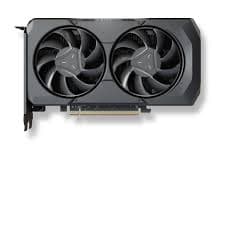
Radeon RX 7600
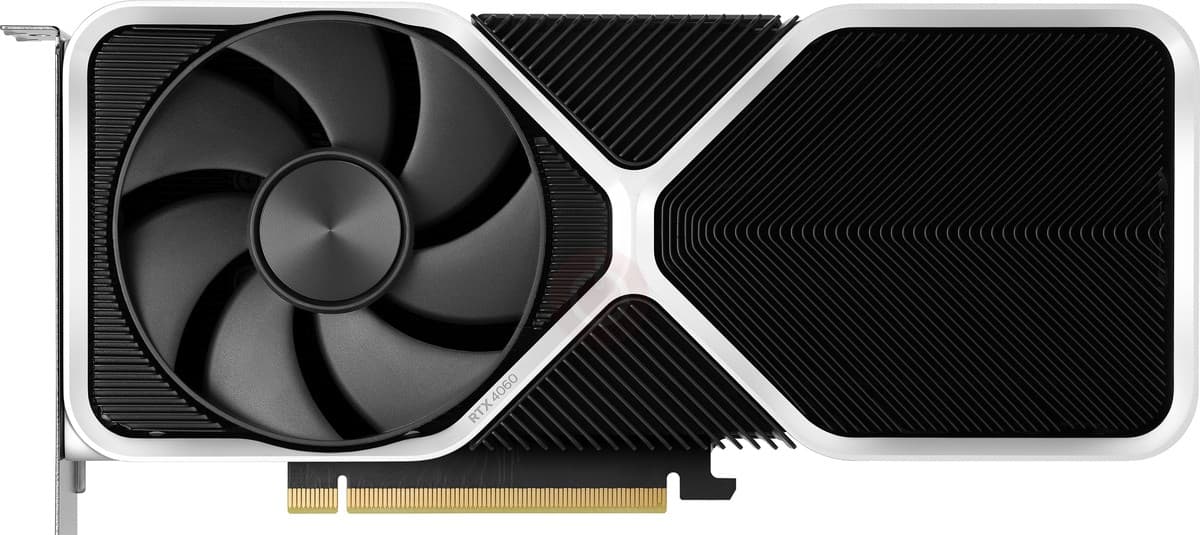
GeForce RTX 4060
avg, 1080p
The short answer
The RTX 4060 is about 7% faster and far more efficient, with the more mature DLSS 3 implementation. The RX 7600 answers with a lower price, AV1 encode of its own, and AMD's AFMF frame interpolation that works outside supported-game lists. Both share the same 8 GB VRAM ceiling, so that isn't a deciding factor here. Pick the RTX 4060 for the smoothest, most efficient experience, pick the RX 7600 to save money without giving up much.
AMD and NVIDIA priced these two within $30 of each other at launch, and they've stayed close competitors ever since. The RTX 4060 pulls ahead on speed and efficiency with the more polished DLSS 3 Frame Generation, while the RX 7600 answers back with a lower price, AV1 encode, and AMD's driver-level AFMF frame interpolation that doesn't need per-game support.
The tables below settle the efficiency-versus-price argument between these two with matched benchmarks, a CPU pairing tool, thermal and power readings, and month-by-month pricing, so you can see which side of that $30 gap is worth paying.
At a glance
Seven dimensions, two cards. Bigger area is not automatically better, each card owns different corners.
Strengths radar
Each axis scored 0-100 relative to the pair
Performance vs price
Up and to the left is better value
Grey dots are neighbouring cards for context.
Which should you buy?
Pick your use case, the winner changes with what you actually do.
Faster average fps and far more efficient, the easy pick for a fresh 1080p build if budget allows.
DLSS 3 upscaling and Frame Generation stretch the RTX 4060 further into 1440p than raw specs suggest.
The mature CUDA and Tensor ecosystem gives the RTX 4060 the edge even though VRAM is tied at 8 GB.
Both have AV1 encode now, but the RX 7600's driver-level AFMF is a genuine extra for creators who also stream.
115 W against 165 W makes the RTX 4060 the easier fit for a small, quiet build.
Cheaper new and used with the better dollars-per-frame, the RX 7600 wins on pure value.
Already own an RX 7600? Skip the RTX 4060, the gap is too small.
Short answer: probably not
A 7% average gain isn't worth the cost of a card swap, especially since you'd be trading one 8 GB card for another 8 GB card. Neither VRAM ceiling nor the core architecture changes enough to justify the spend if your 7600 already runs what you play.
If you're going to spend, aim higher, an RTX 4070 Super or an RX 7700 XT is a genuine, meaningful jump. Only sidegrade to the 4060 if you specifically want the more mature DLSS 3 implementation or the lower power draw for a small-form-factor rebuild.
Full specification comparison
Every spec side by side. The highlighted figure wins each row.
| Specification | RX 7600 | RTX 4060 |
|---|---|---|
| Architecture | ||
| GPU / architecture | Navi 33 · RDNA 3 | AD107 · Ada |
| Process node | TSMC 6 nm | TSMC 4N (5 nm) ▲ |
| Release date | May 25, 2023 | Jun 29, 2023 |
| Launch MSRP | $269 ▲ | $299 |
| Compute | ||
| Cores (SP / CUDA) | 2,048 | 3,072 ▲ |
| RT cores | 32 · 2nd gen RDNA3 RA ▲ | 24 · 3rd gen |
| AI / Tensor cores | 64 AI accelerators | 96 · 4th gen Tensor ▲ |
| Base / boost clock | 1720 / 2655 MHz ▲ | 1830 / 2460 MHz |
| L2 / Infinity Cache | 32 MB Infinity Cache ▲ | 24 MB L2 |
| Memory | ||
| VRAM | 8 GB GDDR6 | 8 GB GDDR6 |
| Memory bus | 128-bit | 128-bit |
| Bandwidth | 288 GB/s ▲ | 272 GB/s |
| Power & form factor | ||
| TDP | 165 W | 115 W ▲ |
| Power connector | 1× 8-pin | 1× 8-pin |
| Suggested PSU | 550 W | 450 W ▲ |
| PCIe interface | 4.0 ×8 | 4.0 ×8 |
| Features | ||
| Upscaling / frame gen | FSR 3 + AFMF | DLSS 3 + Frame Gen ▲ |
| AV1 encode | Yes | Yes |
| Mesh shaders / DX12 Ultimate | Yes | Yes |
| Display outputs | 1×HDMI2.1 · 2×DP2.1 ▲ | 3×DP1.4a · HDMI 2.1 |
Average FPS by game
Switch resolution, metric, ray tracing and upscaling, the bars update live. Hover a bar for the avg / 1% / 0.1% breakdown.
Average FPS · 1080p · Rasterization. Representative data, hover a bar for avg / 1% / 0.1%. Note the RTX 4060's 1% lows fall off at 1440p and up from its 8 GB VRAM.
Smoothness & frametimes
Average FPS hides stutter. This is one run plotted as frametime, a flat line is smooth, spikes are hitches. Watch what the RTX 4060's 8 GB VRAM does in a texture-heavy game.
Frametime: Hogwarts Legacy, 1440p Ultra
Lower and flatter is better · 16.7 ms = 60 fps
Counterintuitive but real: the slower RX 7600 delivers a smoother line here because 12 GB holds the texture pool the 8 GB RTX 4060 keeps evicting, those spikes are VRAM stutter, not raw speed.
Lab scores
Clean apples-to-apples tests, useful, but weaker at predicting real games than the FPS above.
Ray tracing & upscaling
Ray tracing tanks both cards at native resolution. What makes it playable is upscaling, and here the RTX 4060 has a real edge.
Is frame generation "real" performance?
Both support real frame generation now. DLSS 3 on the RTX 4060 inserts an AI frame between two real ones inside supported games, AMD's FSR 3 does the same on the RX 7600, and AMD's driver-level AFMF adds interpolation to almost any game, supported or not, a trick DLSS can't match. Both add a little input latency, and Nvidia Reflex or AMD Anti-Lag claws most of it back.
Use it for single-player and cinematic games on either card. Turn it off for competitive shooters, and avoid it below about 50 base fps on either GPU, where the latency starts to feel off rather than just look smoother.
Will your CPU bottleneck these cards?
A faster GPU only helps if your CPU keeps up. Pick your CPU and resolution to see expected FPS and bottleneck for each card.
CPU + GPU pairing check
The willitbottleneck engine, built right into the comparison.
Estimated from a 43-CPU model across 1440p. A weak CPU mostly bites at 1080p; at higher resolutions the GPU becomes the limiter and the bottleneck shrinks.
Thermals & noise
The efficiency gap shows up here: the newer card runs cooler and quieter, day in and day out.
Real draw, efficiency & PSU
TDP is the rated figure; what matters is real gaming draw and how many frames you get per watt.
Both use a single 8-pin connector. If your PSU already ran the RX 7600, it will run the RTX 4060 easily. Leave about 30% headroom for spikes.
Will it fit, and what to pair it with?
Size to scale
Card length matters for small cases
What monitor to pair
RX 7600: comfortable at 1080p 144 Hz and workable 1440p 60-90 Hz. RTX 4060: similar 1080p strength with a bit more room at 1440p thanks to DLSS. Neither is a real 4K card.
Running an older PCIe 3.0 board?
Both cards run PCIe 4.0 ×8. On an older PCIe 3.0 board that drops to 3.0 ×8 and costs roughly 2-5% in most games for either card, real but rarely a dealbreaker.
Price history & dollars-per-frame
Raw price is only half the story. Cost per frame is the number that decides it, and it keeps moving as prices fall.
New price over time
Street price of new cards (USD)
The 8 GB vs 8 GB question
RX 7600 · 8 GB
- 8 GB plus 32 MB of Infinity Cache handles the large majority of 1080p and light 1440p gaming without stutter.
- AFMF works at the driver level in nearly any game, a genuine extra the RTX 4060 doesn't have.
- It's still only 8 GB, the same ceiling as the RTX 4060 despite the Infinity Cache.
- AMD's AI and creator tooling remains less mature than Nvidia's CUDA and Tensor Core ecosystem.
RTX 4060 · 8 GB
- DLSS 3 Frame Generation and DLSS 4 upscaling are the most mature implementation of this tech available.
- The mature CUDA and Tensor Core ecosystem makes it the easier pick for Stable Diffusion and small LLMs, VRAM parity aside.
- 8 GB is the RTX 4060's well-known weak point, the same limit as the RX 7600, at a higher price.
- AFMF-style universal frame interpolation has no Nvidia equivalent, DLSS 3 needs explicit game support.
Emulation & memory bandwidth
The narrower bus is a real downgrade for emulation
Both cards are closely matched for Switch and PS3-class emulation. The RX 7600's slightly higher bandwidth and Infinity Cache give it a small edge at higher internal resolutions, though the gap is minor enough that either handles most emulation targets comfortably.
Creator, AI & streaming
The newer card is quicker per task, but the older card's extra VRAM unlocks larger jobs it can't fit at all.
Streaming: the AV1 encoder is the differentiator
Both now have a hardware AV1 encoder, RDNA3 added it to close the gap Ada opened first. Quality and file size at matched bitrate are close between the two, pick based on the rest of the card rather than encoding alone.
Overclocking & undervolting
Neither card has dramatic overclocking headroom. Undervolting gives the bigger practical win on both, same performance at lower temperature and noise, and the 165 W RX 7600 has more to gain from it than the already-efficient 115 W RTX 4060.
Pros & cons
RX 7600
- AV1 encode, FSR 3 and driver-level AFMF frame interpolation
- Cheaper new and used, with the better $/frame
- 32 MB Infinity Cache keeps 1080p smooth on a narrow bus
- About 7% slower on average and behind in ray tracing
- Draws 50 W more than the RTX 4060 for less output
RTX 4060
- About 7% faster with the strongest DLSS 3 Frame Generation implementation available
- Very efficient at 115 W, cool, quiet, fits a 450 W PSU
- Mature CUDA and Tensor ecosystem for AI and creator work
- Costs more new and used for a modest fps gain
- Same 8 GB VRAM ceiling as the cheaper RX 7600
Buying pitfalls
Laptop vs desktop, not the same card
A laptop RTX 4060 is a different, weaker chip than the desktop version used here. There's no direct mobile RX 7600 to compare against it under the same name. Never mix laptop and desktop numbers.
AFMF needs a recent AMD driver
AMD Fluid Motion Frames only works well with up-to-date Adrenalin drivers and can introduce visible artifacts in fast camera motion or UI-heavy games. Test it per game rather than leaving it on globally.
RX 7600 vs RTX 4060: your questions answered
Both, by a modest amount. It's about 7% quicker on average and draws far less power, and DLSS 3 Frame Generation is the more polished implementation of the two. The RX 7600 answers with AV1 encode, FSR 3, driver-level AFMF, and a lower price tag.
If budget and fps-per-watt matter most, take the RX 7600. If you want the extra frames and the more mature frame generation and AI software stack, the RTX 4060 is worth the difference.
Yes, it's still a current-generation card with the full RDNA 3 feature set, AV1 encode and frame generation included. It's built for 8 GB 1080p play rather than 1440p, but it holds that lane well.
Not for the fps alone, a 7% gain doesn't justify the swap. It's only worth it if you specifically want DLSS 3's more mature Frame Generation or the lower power draw for a compact build.
The RTX 4060. NVIDIA's CUDA and Tensor Core tooling is more developed than AMD's ROCm/DirectML path, even though both cards carry the same 8 GB ceiling.
Barely. Both now pack a hardware AV1 encoder, so quality and export speed land close together at matched settings, pick based on the rest of the card instead.
Both carry dedicated RT hardware, but the RTX 4060's cores are faster per-unit, so it leads in ray-traced frame rates even though the RX 7600 lists more RT accelerators on the spec sheet.
DLSS 3 on the 4060 is the more mature, more widely supported option. FSR 3 on the 7600 comes close on quality and adds AFMF, driver-level frame interpolation that works in almost any game whether it's officially supported or not.
At 1080p with an aging CPU, possibly. Check the pairing tool above, a Ryzen 5 5600 or Core i5-12400F or newer keeps either card fed well up to 1440p.
A wide gap for this tier: the RTX 4060 sits at 115 W against the RX 7600's 165 W. That difference shows up directly in lower temperatures and quieter fans on the 4060 under load.
A solid 550 W unit for the RX 7600, or 450 W for the RTX 4060. A flexible 550-650 W supply covers either one without a second thought.
Both cards are compact, roughly 200-204 mm on typical models, so most cases fit either. Both run PCIe 4.0 x8, so an older PCIe 3.0 board costs a similar small hit, about 2-5%, on either card.
Not comfortably on modern AAA titles. Both belong in the 1080p-to-1440p bracket, treat 4K as occasional, upscaler-assisted territory on lighter games rather than the target resolution.
Both are still sold new and turning up used more often now. A used RX 7600 wins on pure fps-per-dollar, while a new RTX 4060 earns its premium with the more polished DLSS 3 experience and full warranty.
Plenty on both sides. RDNA 3 and Ada are current architectures getting active, full driver support, neither is anywhere near end-of-life.
No. The laptop RTX 4060 is a different, lower-power chip that can lose to desktop cards a tier below it, never treat its numbers as interchangeable with the desktop part. AMD doesn't sell a laptop chip under the RX 7600 name to compare against it.