
RX 9070 XT vs RTX 5070
The complete head-to-head: full specs, real per-game FPS with 1% lows, ray tracing, a live CPU-bottleneck check, thermals, power and value, with a straight verdict.
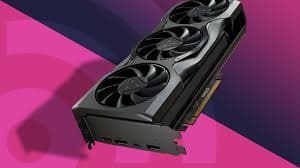
Radeon RX 9070 XT
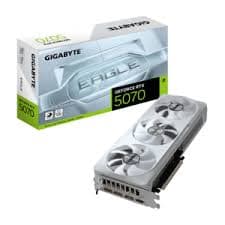
GeForce RTX 5070
avg, 1080p
The short answer
The RX 9070 XT is about 16% faster in raw raster performance and carries more VRAM on a wider bus, 16 GB and 256-bit versus 12 GB and 192-bit, yet it costs slightly more at street price. That makes it the better pure-gaming buy, dollar for frame, and FSR 4 has closed most of AMD's old upscaling gap. The RTX 5070 fights back with a real edge in ray tracing, DLSS 4 Multi Frame Generation, and a far more mature CUDA-based creator and AI ecosystem, Blender and Stable Diffusion are not close. Pick the AMD card for raster fps per dollar, pick the NVIDIA card if ray tracing, frame generation depth, or any AI and creator work matters to you.
AMD's best RDNA 4 card meets NVIDIA's mainstream Blackwell offering here, and it's arguably the defining cross-brand fight of this generation. The 9070 XT wins the price-to-performance math with more raw horsepower and VRAM, while the 5070 leans on NVIDIA's deeper software stack: DLSS 4 Multi Frame Generation, mature ray tracing, and a CUDA ecosystem that still dominates AI and creator apps.
What decides this one isn't raw fps, it's whether you value the 9070 XT's raster and memory lead or the 5070's software depth more, and everything from frame-by-frame benchmarks to thermals, power draw, pricing trends and a CPU pairing check is laid out below to help make that call.
At a glance
Seven dimensions, two cards. Bigger area is not automatically better, each card owns different corners.
Strengths radar
Each axis scored 0-100 relative to the pair
Performance vs price
Up and to the left is better value
Grey dots are neighbouring cards for context.
Which should you buy?
Pick your use case, the winner changes with what you actually do.
16% more raw frames and 16 GB of VRAM make the 9070 XT the stronger pick when ray tracing isn't the priority.
NVIDIA's RT cores and DLSS 4 Multi Frame Gen still open a real gap once ray tracing gets heavy.
CUDA and Tensor cores give the 5070 a dramatic real-world lead in Stable Diffusion and local AI tools.
Both encode AV1, but NVENC's software maturity in OBS and editors still gives NVIDIA the edge.
Lower dollars-per-frame at street price, even though the sticker price itself is a little higher.
The wider 256-bit bus and extra VRAM help high-resolution emulation, where bandwidth and capacity both matter.
Coming from an older card? This is really a raster-vs-features decision, not a clear win.
Short answer: probably not
If pure frames per dollar in traditional rasterized games is what you care about, the 9070 XT's 16% lead and extra VRAM make it the more efficient buy, despite costing about $30 more at street price. Do not choose it expecting DLSS-level frame generation depth or CUDA-grade AI performance, FSR 4 is very good but the software gap with NVIDIA has not closed completely.
If ray tracing, Multi Frame Generation, or any AI/creator workload is part of your use case, the RTX 5070's slower raster number is easily worth trading for. This is one of the few matchups on this site where the 'faster' card and the 'better overall' card genuinely depend on what you do with the GPU.
Full specification comparison
Every spec side by side. The highlighted figure wins each row.
| Specification | RX 9070 XT | RTX 5070 |
|---|---|---|
| Architecture | ||
| GPU / architecture | Navi 48 · RDNA 4 | GB205 · Blackwell |
| Process node | TSMC N4P (4 nm) | TSMC 4N (5 nm class) |
| Release date | Mar 6, 2025 | Mar 5, 2025 |
| Launch MSRP | $599 | $549 ▲ |
| Compute | ||
| Cores | 4,096 stream · 64 CU | 6,144 CUDA |
| RT accelerators | 64 · 2nd gen RDNA | 48 RT cores · 4th gen |
| AI accelerators | 128 · 2nd gen | 192 Tensor cores · 5th gen |
| Game / boost clock | 2400 / 2970 MHz | 2160 / 2510 MHz |
| Cache (Infinity/L2) | 64 MB Infinity Cache | 48 MB L2 |
| Memory | ||
| VRAM | 16 GB GDDR6 ▲ | 12 GB GDDR7 |
| Memory bus | 256-bit ▲ | 192-bit |
| Bandwidth | 640 GB/s | 672 GB/s ▲ |
| Power & form factor | ||
| TDP | 304 W | 250 W ▲ |
| Power connector | 2× 8-pin | 1× 16-pin (12V-2x6) |
| Suggested PSU | 750 W | 650 W ▲ |
| PCIe interface | 5.0 ×16 | 5.0 ×16 |
| Features | ||
| Upscaling | FSR 4 + FSR 3.1 Frame Gen | DLSS 4 + Multi Frame Gen ▲ |
| AV1 encode/decode | Yes · single encoder | Yes · single encoder |
| Display outputs | 2×DP2.1a · 2×HDMI2.1b | 3×DP2.1a · HDMI2.1b |
Average FPS by game
Switch resolution, metric, ray tracing and upscaling, the bars update live. Hover a bar for the avg / 1% / 0.1% breakdown.
Average FPS · 1080p · Rasterization. Representative data, hover a bar for avg / 1% / 0.1%. Note the RTX 5070's 1% lows fall off at 1440p and up from its 8 GB VRAM.
Smoothness & frametimes
Average FPS hides stutter. This is one run plotted as frametime, a flat line is smooth, spikes are hitches. Watch what the RTX 5070's 8 GB VRAM does in a texture-heavy game.
Frametime: Hogwarts Legacy, 1440p Ultra
Lower and flatter is better · 16.7 ms = 60 fps
Counterintuitive but real: the slower RX 9070 XT delivers a smoother line here because 12 GB holds the texture pool the 8 GB RTX 5070 keeps evicting, those spikes are VRAM stutter, not raw speed.
Lab scores
Clean apples-to-apples tests, useful, but weaker at predicting real games than the FPS above.
Ray tracing & upscaling
Ray tracing tanks both cards at native resolution. What makes it playable is upscaling, and here the RTX 5070 has a real edge.
Is frame generation "real" performance?
FSR 4 is AMD's first machine-learning upscaler and a genuine leap over FSR 3.1's image quality, but it only runs on RDNA 4 hardware, this card and the non-XT RX 9070. Frame generation on the 9070 XT still uses the older FSR 3.1 method, one AI-inserted frame per real frame. DLSS 4 on the RTX 5070 adds Multi Frame Generation, up to three inserted frames per real frame, which is why the frame-gen gap in the chart above is larger than the raster gap.
Both are best used in single-player, cinematic games at a healthy base frame rate, above roughly 50-55 fps, and both add a little input latency that their respective low-latency modes (Anti-Lag 2 or Reflex) mostly offset. FSR 4's supported-game list is growing quickly but is still shorter than DLSS 4's, check compatibility for the specific titles you play.
Will your CPU bottleneck these cards?
A faster GPU only helps if your CPU keeps up. Pick your CPU and resolution to see expected FPS and bottleneck for each card.
CPU + GPU pairing check
The willitbottleneck engine, built right into the comparison.
Estimated from a 43-CPU model across 1440p. A weak CPU mostly bites at 1080p; at higher resolutions the GPU becomes the limiter and the bottleneck shrinks.
Thermals & noise
The efficiency gap shows up here: the newer card runs cooler and quieter, day in and day out.
Real draw, efficiency & PSU
TDP is the rated figure; what matters is real gaming draw and how many frames you get per watt.
Both use a single 8-pin connector. If your PSU already ran the RX 9070 XT, it will run the RTX 5070 easily. Leave about 30% headroom for spikes.
Will it fit, and what to pair it with?
Size to scale
Card length matters for small cases
What monitor to pair
RX 9070 XT: strong at 1440p 165-240 Hz and a genuinely capable 4K 60-90 Hz card with FSR 4. RTX 5070: best at 1440p 165 Hz and 1080p 240 Hz+, treat 4K as DLSS-assisted rather than native territory.
Running an older PCIe 3.0 board?
Both cards run a full PCIe 5.0 ×16 link and are backward compatible with PCIe 4.0 boards at effectively no performance loss, since neither saturates a 4.0 ×16 link at these performance levels.
Price history & dollars-per-frame
Raw price is only half the story. Cost per frame is the number that decides it, and it keeps moving as prices fall.
New price over time
Street price of new cards (USD)
The 16 GB vs 12 GB question
RX 9070 XT · 16 GB
- 16 GB on a 256-bit bus gives real headroom at 1440p and light 4K texture packs.
- More capacity than the 5070 for local AI models that fit, though software support matters more than raw VRAM here.
- FSR 4's supported-game list is shorter than DLSS 4's, so some titles fall back to the older FSR 3.1.
- RDNA 4 is a newer architecture, so driver polish in edge cases is still catching up in places.
RTX 5070 · 12 GB
- GDDR7 gives the narrower 192-bit bus more bandwidth per pin, so 12 GB feels less constrained than the number alone suggests.
- DLSS 4 Multi Frame Generation has the deepest game support and the most mature implementation available today.
- CUDA and Tensor cores give a dramatic real-world lead in Blender, Stable Diffusion and most AI tooling.
- 12 GB is the tighter number of the two, and it shows first in texture-heavy games at 1440p Ultra and above.
Emulation & memory bandwidth
The narrower bus is a real downgrade for emulation
Both cards are strong for current emulation. The 9070 XT's extra VRAM and wider 256-bit bus help slightly with high-internal-resolution RPCS3 and Wii U/Switch emulation, where bandwidth and capacity both get pushed. The RTX 5070's GDDR7 bandwidth narrows that gap more than the bus-width numbers alone suggest, so in practice the difference is smaller than it looks on paper.
Creator, AI & streaming
The newer card is quicker per task, but the older card's extra VRAM unlocks larger jobs it can't fit at all.
Streaming: the AV1 encoder is the differentiator
Both cards encode AV1 in hardware, and quality is close at matched bitrates. NVENC still has the edge in software polish, broader OBS and editor preset support, and more consistent quality-per-bitrate tuning built up over several generations. AMD's RDNA 4 encoder is a real improvement over RDNA 3 and closes most, not all, of that gap.
Overclocking & undervolting
Both cards have modest overclocking headroom, the 9070 XT a little more at around 7% versus roughly 6% on the 5070. On either, undervolting gives a better return than pushing clocks: similar performance at meaningfully lower power, heat and noise.
Pros & cons
RX 9070 XT
- 16% faster raster performance and better $/frame at street price
- 16 GB VRAM on a wider 256-bit bus
- FSR 4 is a real image-quality leap for AMD upscaling
- Ray tracing and path tracing still trail NVIDIA at this tier
- Blender, Stable Diffusion and most AI tools are noticeably slower
RTX 5070
- DLSS 4 Multi Frame Generation is the deepest, most mature frame-gen feature available
- Dramatically faster in Blender, Stable Diffusion and AI tooling via CUDA
- Cooler, quieter and slightly more efficient at 250 W
- 12 GB and a 192-bit bus, the tighter memory setup of the two
- 16% slower in pure raster gaming
Buying pitfalls
Compare current prices, not just this page's numbers
The 9070 XT's value lead comes from being faster per dollar at similar street prices, not from being outright cheaper, it typically costs $20-40 more than the 5070. Check both cards' actual local price before assuming AMD is the budget option.
FSR 4 needs RDNA 4, it will not run on older Radeon cards
FSR 4's ML upscaling model requires the AI accelerators built into RDNA 4. Older Radeon GPUs fall back to FSR 3.1 image quality, which is a real step down, keep that in mind if you're comparing against an older AMD card rather than this one.
RX 9070 XT vs RTX 5070: your questions answered
For pure raster gaming and dollars-per-frame, yes, it's roughly 16% quicker with more VRAM. For ray tracing, DLSS 4 Multi Frame Generation, and AI or creator work, the RTX 5070 pulls clearly ahead, so the answer depends on what you're actually doing with it.
Go with the 9070 XT if you mostly play traditional rasterized games and want the most fps per dollar. Go with the RTX 5070 if ray tracing, Multi Frame Generation, or Stable Diffusion, LLM, or Blender work is part of what you do.
Yes, both launched in March 2025 on their brand's current architecture, RDNA 4 and Blackwell, and both remain the relevant mainstream-to-upper-mid option for their maker as of September 2026.
No, the RTX 5070 wins here by a wide margin. NVIDIA's CUDA and Tensor core ecosystem is far more developed for Stable Diffusion, local LLMs and Blender or OptiX rendering, and the creator benchmarks above show that gap clearly despite the 9070 XT's larger memory pool.
Close, with a slight edge to NVIDIA. Both encode AV1 in hardware at similar quality, but NVENC's software support across OBS and editing suites is more polished after several generations of refinement.
By a meaningful margin, roughly 20-25% faster in RT-heavy titles even while trailing in overall raster performance. RDNA 4's RT accelerators are a big step up from the previous generation, but still fall short of NVIDIA's dedicated RT cores at this price.
Both now use machine learning, which closes most of AMD's old image-quality gap. DLSS 4 goes further with Multi Frame Generation, inserting up to three AI frames per real one, while the 9070 XT's frame generation still relies on the older single-frame FSR 3.1 method. DLSS 4 also has broader game support today.
No. FSR 4's ML model needs the AI accelerators built into RDNA 4, so only the RX 9070 and RX 9070 XT support it. Older Radeon GPUs fall back automatically to FSR 3.1, which looks noticeably softer by comparison.
Most likely it's the CPU limiting these two, especially at 1080p. Check the pairing tool on this page, a Ryzen 7 7700X, Core i5-13600K or better keeps either card fed well at 1440p.
About 300 W in real gaming load for the 9070 XT versus roughly 245 W for the RTX 5070, an 18% gap, and the 5070 also runs a few degrees cooler and a bit quieter under that load.
A quality 750 W unit for the RX 9070 XT, which uses two 8-pin connectors, and 650 W for the RTX 5070 on its single 16-pin connector. Step up to 850 W if you're pairing either with a power-hungry CPU.
Most 9070 XT AIB cards run 300-320 mm across 3 slots, noticeably bigger than the RTX 5070's compact 268 mm on 2 slots, so check your case clearance carefully for the AMD card. Both run PCIe 5.0 x16 with no real loss on a 4.0 board.
The RTX 5070 does, as a separate, lower-power chip that shouldn't be compared directly to the desktop numbers here. AMD hasn't shipped an RDNA 4 laptop GPU under the 9070 XT name as of September 2026.
Both can do it, with upscaling carrying real weight. The 9070 XT's extra VRAM and FSR 4 make it a genuinely capable 4K card in most titles, while the RTX 5070 leans more on DLSS 4 to get there and plays best as a 1440p-first card.
Only a modest saving either way, roughly $70-80 off street price for a used unit. Given how new both cards are, paying for full warranty coverage is worth the small premium.
Years, on both sides. RDNA 4 and Blackwell are each brand's current architecture with active development behind them, though RDNA 4, being the newer of the two, has seen more post-launch driver refinement than Blackwell so far.