
GTX 1060 6GB vs RX 580 8GB
The complete head-to-head: full specs, real per-game FPS with 1% lows, ray tracing, a live CPU-bottleneck check, thermals, power and value, with a straight verdict.
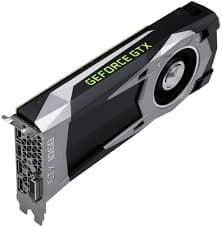
GeForce GTX 1060 6GB
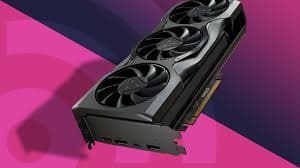
Radeon RX 580 8GB
avg, 1080p
The short answer
This is the classic budget rivalry, and a decade on the RX 580 8GB is still the slightly better buy. It's about 12% faster on average and its extra 2 GB of VRAM matters more now than it did at launch, texture packs that fit on the 580 stutter on the 1060. The trade-off is power: the 580 draws 65 more watts and runs hotter and louder. The GTX 1060 6GB stays relevant as the cheaper, cooler, more efficient option if you can live with 6 GB and slightly lower frame rates.
Few rivalries in GPU history get argued about as much as this one. Both launched within a year of each other at nearly the same price, and both are still floating around the used market for pocket change a decade later. The RX 580 8GB has more raw compute, more VRAM, and a wider memory bus. The GTX 1060 6GB draws far less power and runs cooler and quieter. Neither is a 2026 gaming card in the traditional sense, but for a free hand-me-down or a $50 eBay bid, one of them might still be the right call.
The classic 1080p budget rivalry gets settled in full below, with side-by-side specs, ten-game frame rates and 1% lows, power and thermals, used pricing over time, and a clear call on which to buy.
At a glance
Seven dimensions, two cards. Bigger area is not automatically better, each card owns different corners.
Strengths radar
Each axis scored 0-100 relative to the pair
Performance vs price
Up and to the left is better value
Grey dots are neighbouring cards for context.
Which should you buy?
Pick your use case, the winner changes with what you actually do.
The extra VRAM and slightly higher frame rates make the 580 the better all-round pick if power draw isn't a concern.
120 W versus 185 W is a real difference on an old or budget PSU, and the 1060 runs noticeably cooler and quieter.
Neither card is good at this, but the 1060's CUDA support gives it working, if slow, Stable Diffusion performance. The 580's DirectML path is rougher.
NVENC has slightly lower CPU overhead in OBS than the 580's older VCE encoder, a known quirk from this era.
A single 6-pin connector and 400 W PSU recommendation make the 1060 the easier fit for a cramped or older build.
The 580's wider 256-bit bus and 8 GB of VRAM help more in demanding Switch and PS3 cores than the 1060's narrower 192-bit link.
Own either of these? A real upgrade costs less than you'd think.
Short answer: probably not
Both cards are well past the point where chasing a sidegrade makes sense, a 1060 owner buying a 580, or vice versa, would spend real money for single-digit percentage gains. If either card still runs what you play, keep it and save.
When you're ready to move on, a used RTX 3050 or RX 6600 is a genuine 2-3x jump in raw performance and adds ray tracing and modern upscaling, often for less than $150. That's the upgrade worth making, not a lateral move between these two.
Full specification comparison
Every spec side by side. The highlighted figure wins each row.
| Specification | GTX 1060 6GB | RX 580 8GB |
|---|---|---|
| Architecture | ||
| GPU / architecture | GP106 · Pascal | Polaris 20 · GCN 4 |
| Process node | TSMC 16 nm | GlobalFoundries 14 nm |
| Release date | Jul 19, 2016 | Apr 18, 2017 |
| Launch MSRP | $249 | $229 ▲ |
| Compute | ||
| CUDA / stream processors | 1,280 CUDA cores | 2,304 stream processors ▲ |
| RT cores | None | None |
| Tensor cores | None | None |
| Base / boost clock | 1506 / 1708 MHz ▲ | 1257 / 1340 MHz |
| L2 cache | 1.5 MB | 2 MB ▲ |
| Memory | ||
| VRAM | 6 GB GDDR5 | 8 GB GDDR5 ▲ |
| Memory bus | 192-bit | 256-bit ▲ |
| Bandwidth | 192 GB/s | 256 GB/s ▲ |
| Power & form factor | ||
| TDP | 120 W ▲ | 185 W |
| Power connector | 1× 6-pin ▲ | 1× 8-pin + 1× 6-pin |
| Suggested PSU | 400 W ▲ | 500 W |
| PCIe interface | 3.0 ×16 | 3.0 ×16 |
| Features | ||
| Upscaling | FSR 2/3 (no DLSS) | FSR 2/3, native driver support ▲ |
| AV1 encode (NVENC/VCE) | No | No |
| Display outputs | 1×DVI · HDMI 2.0 · 3×DP1.4 | 1×DVI · HDMI 2.0b · 3×DP1.4 |
Average FPS by game
Switch resolution, metric, ray tracing and upscaling, the bars update live. Hover a bar for the avg / 1% / 0.1% breakdown.
Average FPS · 1080p · Rasterization. Representative data, hover a bar for avg / 1% / 0.1%. Note the RX 580 8GB's 1% lows fall off at 1440p and up from its 8 GB VRAM.
Smoothness & frametimes
Average FPS hides stutter. This is one run plotted as frametime, a flat line is smooth, spikes are hitches. Watch what the RX 580 8GB's 8 GB VRAM does in a texture-heavy game.
Frametime: Hogwarts Legacy, 1080p High
Lower and flatter is better · 16.7 ms = 60 fps
Counterintuitive but real: the slower GTX 1060 6GB delivers a smoother line here because 12 GB holds the texture pool the 8 GB RX 580 8GB keeps evicting, those spikes are VRAM stutter, not raw speed.
Lab scores
Clean apples-to-apples tests, useful, but weaker at predicting real games than the FPS above.
Ray tracing & upscaling
Ray tracing tanks both cards at native resolution. What makes it playable is upscaling, and here the RX 580 8GB has a real edge.
Is frame generation "real" performance?
Neither card supports DLSS, that's an NVIDIA-only feature tied to newer Tensor core hardware, and the GTX 1060 doesn't have it either. AMD's FSR 3 Frame Generation is technically vendor-agnostic and can run on older GPUs including both of these, but at the frame rates either card produces in modern games, there usually aren't enough real frames per second to build a clean interpolated frame from.
In practice, treat frame generation as unavailable on this pairing. If smoother motion matters to you, it's a better reason to upgrade than to chase a workaround on decade-old hardware.
Will your CPU bottleneck these cards?
A faster GPU only helps if your CPU keeps up. Pick your CPU and resolution to see expected FPS and bottleneck for each card.
CPU + GPU pairing check
The willitbottleneck engine, built right into the comparison.
Estimated from a 43-CPU model across 1440p. A weak CPU mostly bites at 1080p; at higher resolutions the GPU becomes the limiter and the bottleneck shrinks.
Thermals & noise
The efficiency gap shows up here: the newer card runs cooler and quieter, day in and day out.
Real draw, efficiency & PSU
TDP is the rated figure; what matters is real gaming draw and how many frames you get per watt.
Both use a single 8-pin connector. If your PSU already ran the GTX 1060 6GB, it will run the RX 580 8GB easily. Leave about 30% headroom for spikes.
Will it fit, and what to pair it with?
Size to scale
Card length matters for small cases
What monitor to pair
Both cards are realistically 1080p-only at this point. The RX 580 can push 1080p medium-to-high at 60 fps in most current games; the GTX 1060 6GB sits a step behind, more comfortable at 1080p medium or dropping to 900p in the heaviest titles.
Running an older PCIe 3.0 board?
Both cards run a full PCIe 3.0 ×16 link and neither comes close to saturating it at their performance level, so PCIe generation isn't a factor for this pairing on any motherboard built in the last decade.
Price history & dollars-per-frame
Raw price is only half the story. Cost per frame is the number that decides it, and it keeps moving as prices fall.
New price over time
Street price of new cards (USD)
The 6 GB vs 8 GB question
GTX 1060 6GB · 6 GB
- 6 GB was comfortable in 2016 and still opens most 2026 esports and older titles at 1080p high.
- GDDR5 on a 192-bit bus keeps bandwidth reasonably balanced for the card's compute level.
- 6 GB is the first thing to run out in modern AAA at 1080p ultra with texture packs, well before the GPU core itself gives up.
- It has less headroom than the 580's 8 GB for texture mods, multitasking, or heavier overlays while gaming.
RX 580 8GB · 8 GB
- 8 GB keeps modern texture packs from stuttering, the single biggest reason the 580 has aged better than the 1060.
- 256-bit bus and 256 GB/s bandwidth are both well ahead of the 1060's, so the memory system isn't the bottleneck.
- The extra headroom helps far more in 2026's texture-heavy games than it did at launch.
- The GPU core is still the limit in the newest, most demanding titles regardless of the extra memory.
Emulation & memory bandwidth
The narrower bus is a real downgrade for emulation
The RX 580's wider 256-bit bus and 8 GB of VRAM handle high-resolution Switch and PS3 emulation noticeably better than the 1060's narrower 192-bit, 6 GB setup. If emulation is the main use case, the 580 is the better of these two even accounting for its higher power draw.
Creator, AI & streaming
The newer card is quicker per task, but the older card's extra VRAM unlocks larger jobs it can't fit at all.
Streaming: the AV1 encoder is the differentiator
Neither card has AV1. The GTX 1060's NVENC encoder is widely reported to carry lower CPU overhead in OBS than the RX 580's older VCE block, a known quirk from this generation, so streaming while gaming tends to feel smoother on the 1060 even though the 580 is the faster card overall.
Overclocking & undervolting
Both cards have modest overclocking headroom left. The RX 580 responds a bit better to a power limit increase plus a mild core bump, roughly 11% versus the 1060's 8%, but neither turns into a meaningfully different card through tuning alone.
Pros & cons
GTX 1060 6GB
- Draws far less power and runs cooler and quieter than the 580
- Slightly cheaper on the used market
- Better Stable Diffusion and Blender performance via CUDA
- Only 6 GB VRAM versus the 580's 8 GB
- About 12% slower on average across modern games
- Narrower 192-bit memory bus
RX 580 8GB
- 8 GB VRAM and a wider 256-bit bus age noticeably better
- About 12% faster on average across modern games
- Slightly more overclocking headroom
- Draws considerably more power, 185 W vs 120 W
- Runs hotter and louder under load
- Weaker Stable Diffusion / AI performance
Buying pitfalls
Which GTX 1060 are you buying?
There's also a cut-down 3GB version with fewer CUDA cores (1,152 instead of 1,280) and reduced VRAM. Everything on this page refers to the 6 GB card. Confirm the listing says 6 GB before you buy, the 3GB version is meaningfully slower and runs out of memory fast.
RX 580 4GB exists too, avoid it
AMD also sold a 4GB RX 580 at a lower price. It was a weak buy even in 2017 and is a poor one now, 4 GB is too tight for anything beyond the lightest modern games. This page covers the 8GB card exclusively.
GTX 1060 6GB vs RX 580 8GB: your questions answered
In most games, yes, it's about 12% faster on average and its 8 GB of VRAM has aged better than the 1060's 6 GB. The 1060 draws far less power and runs cooler, which is the main reason to still pick it.
If you can find either cheap and just want the faster, more future-proof card, the RX 580. If power draw, heat, or noise matter more, or you want slightly better Stable Diffusion performance, the GTX 1060 6GB.
For light 1080p gaming and older or esports titles, yes, both still work. For current AAA games at real settings, no, both are firmly entry-level to unplayable territory now, closer to a stopgap than a real gaming card.
No. A roughly 12% difference either direction isn't worth spending money on a decade-old sidegrade. Save toward a genuine upgrade like a used RTX 3050 or RX 6600 instead.
The GTX 1060, mainly because NVIDIA's CUDA support is more mature and better optimized for these workloads than AMD's ROCm/DirectML stack was on Polaris-era hardware. Neither card is genuinely good at this.
The GTX 1060 for pure streaming, its NVENC encoder has lower CPU overhead in OBS than the 580's VCE block. For raw editing throughput the extra VRAM on the 580 can help with larger timelines.
Neither supports DLSS, that requires newer NVIDIA hardware. Both can technically run FSR, since it's open and works on any GPU, but at these frame rates there usually isn't enough headroom to make it worthwhile.
No. Neither the GTX 1060 nor the RX 580 has any ray tracing hardware, and turning RT on in a game that supports it will either be blocked or run at unusable frame rates.
Rarely, these are weak enough GPUs that almost any CPU from the last eight years keeps them fed, even at 1080p. If anything, the GPU is the bottleneck here, not the processor.
The GTX 1060 wins clearly: 120 W against the RX 580's 185 W, which means noticeably lower temperatures and less fan noise under load. Neither card reliably idles silent, fan-stop wasn't standard yet in this era.
A 400 W unit is enough for the GTX 1060 on its single 6-pin connector; the RX 580 wants at least 500 W with its 8-pin plus 6-pin setup. A 500-550 W supply covers either card with room to spare.
Most models of either card run 200-230 mm, so check your case's clearance either way. Both use a full PCIe 3.0 ×16 link and won't be limited by PCIe generation on any board built in the last ten years.
Mobile GTX 1060 variants exist and perform close to the desktop card, unusually good parity for this era. AMD did not widely ship a mobile RX 580 equivalent, most laptop Polaris parts are different, lower-tier chips.
No, not for anything beyond very old or extremely light games. Both are 1080p cards at this point, and even that requires dropping settings in current titles.
Both are used-market only now, neither is manufactured anymore. Buy from a seller with a return window, test before the window closes, and expect to pay $45-85 depending on condition and cooler quality.
Support is winding down for both. NVIDIA still ships driver updates that include Pascal, but new feature work has moved on; AMD's Polaris support is similarly maintenance-only at this point. Neither is a long-term bet, treat either as a stopgap.