
RTX 3080 Ti vs RTX 4070
The complete head-to-head: full specs, real per-game FPS with 1% lows, ray tracing, a live CPU-bottleneck check, thermals, power and value, with a straight verdict.
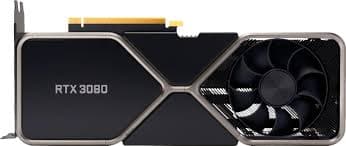
GeForce RTX 3080 Ti
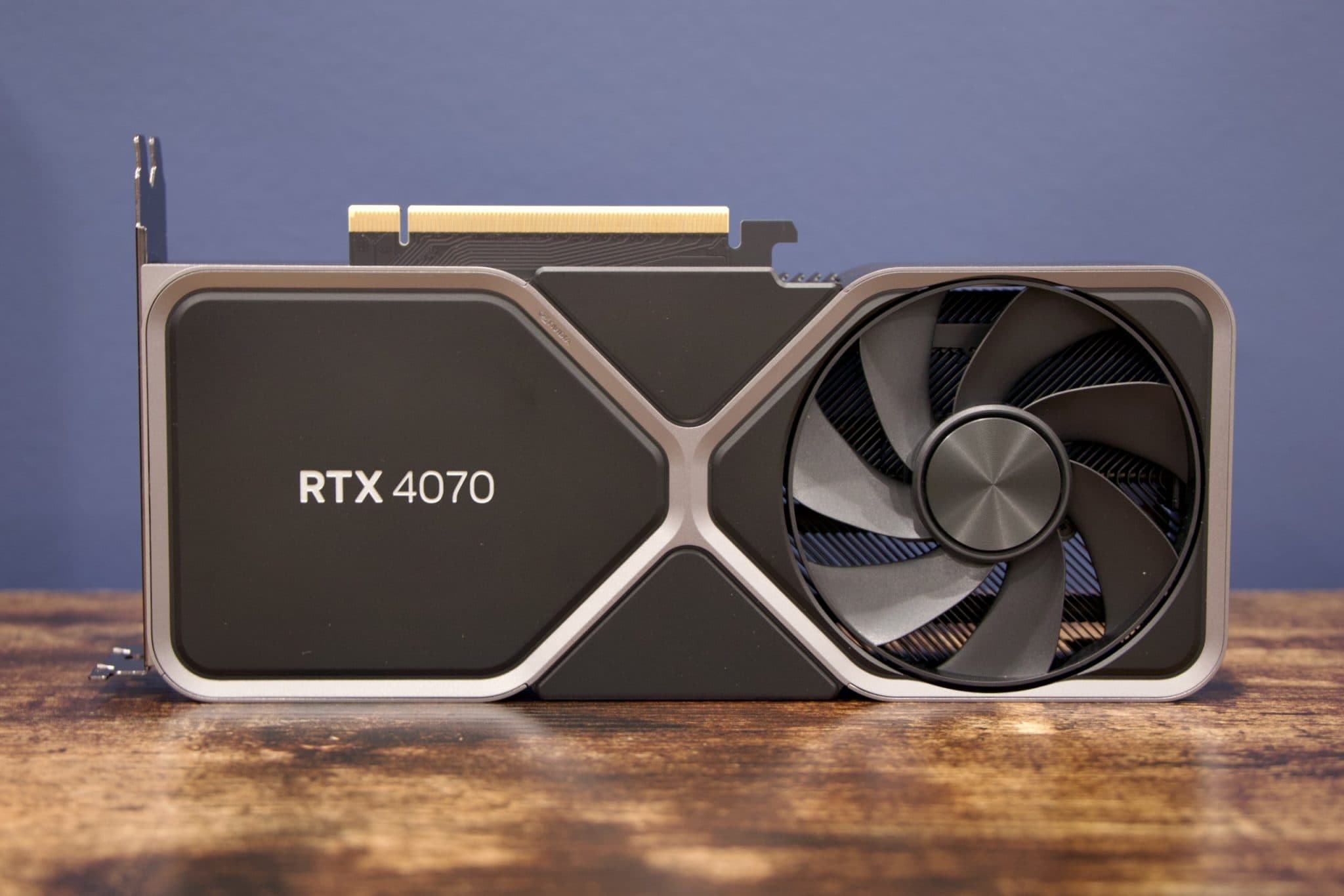
GeForce RTX 4070
avg, 1080p
The short answer
The RTX 3080 Ti and RTX 4070 both carry 12 GB of VRAM, so this comes down to raw speed, efficiency, and price. The 3080 Ti is about 13% faster on average and, on the used market, typically costs less too, an unusual case where the older card wins on both fronts. The 4070 answers back with roughly 150 W less power draw, a smaller cooler, and DLSS 4 plus AV1 encoding that the 3080 Ti launched without. If you can find a well-tested used 3080 Ti, it is the sharper buy on paper. If you want a warranty, lower running costs, and current-gen features, the 4070 is the safer modern choice.
Both of these cards carry the same 12 GB of VRAM, so unlike most cross-gen matchups this is not a memory argument at all. The RTX 3080 Ti still edges out the RTX 4070 on raw speed, and it often costs less used, a genuinely unusual combination where the older card wins on both performance and price. The RTX 4070 fights back with a much lower power draw and NVIDIA's current feature set.
The full spec table is below, along with ten-game frame rates anchored by a 1440p Hogwarts Legacy frametime chart, ray tracing numbers, a CPU-pairing checker, thermal and power readings, price history for both, and a verdict that has nothing to do with VRAM capacity since both carry the same 12 GB.
At a glance
Seven dimensions, two cards. Bigger area is not automatically better, each card owns different corners.
Strengths radar
Each axis scored 0-100 relative to the pair
Performance vs price
Up and to the left is better value
Grey dots are neighbouring cards for context.
Which should you buy?
Pick your use case, the winner changes with what you actually do.
13% faster on average and a wider memory bus keep the 3080 Ti ahead at the same 12 GB ceiling.
200 W, a smaller cooler, and a warranty make the 4070 the easier choice for a fresh, efficient build.
Same 12 GB ceiling on both, but more raw CUDA and RT cores give the 3080 Ti an edge in the heaviest workloads.
AV1 hardware encoding and DLSS 4 come standard on the 4070, the 3080 Ti has neither.
At 200 W the 4070 fits a smaller PSU and cooler than the 350 W 3080 Ti.
912 GB/s over a 384-bit bus beats the 4070's 504 GB/s over 192-bit in bandwidth-heavy emulation.
Already own a 3080 Ti? Don't sidegrade to a 4070.
Short answer: probably not
A 4070 would cost you roughly 13% of your frame rate for the same 12 GB of VRAM you already have. The upside is about 150 W less power draw and DLSS 4 plus AV1 support, real, but not a performance upgrade in any sense.
If you want genuinely more speed and VRAM, an RTX 4080 or 4080 Super is the real step up, 16 GB and a clear generational leap over the 3080 Ti. Only move to a plain 4070 if efficiency and modern features matter more to you than keeping your current performance level.
Full specification comparison
Every spec side by side. The highlighted figure wins each row.
| Specification | RTX 3080 Ti | RTX 4070 |
|---|---|---|
| Architecture | ||
| GPU / architecture | GA102 · Ampere | AD104 · Ada |
| Process node | Samsung 8 nm | TSMC 4N (5 nm) ▲ |
| Release date | Jun 3, 2021 | Apr 13, 2023 |
| Launch MSRP | $1,199 | $599 ▲ |
| Compute | ||
| CUDA cores | 10,240 ▲ | 5,888 |
| RT cores | 80 · 2nd gen ▲ | 46 · 3rd gen |
| Tensor cores | 320 · 3rd gen ▲ | 184 · 4th gen |
| Base / boost clock | 1365 / 1665 MHz | 1920 / 2475 MHz ▲ |
| L2 cache | 6 MB | 36 MB ▲ |
| Memory | ||
| VRAM | 12 GB GDDR6X | 12 GB GDDR6X |
| Memory bus | 384-bit ▲ | 192-bit |
| Bandwidth | 912 GB/s ▲ | 504 GB/s |
| Power & form factor | ||
| TDP | 350 W | 200 W ▲ |
| Power connector | 2× 8-pin | 1× 16-pin (12VHPWR) |
| Suggested PSU | 750 W | 650 W ▲ |
| PCIe interface | 4.0 ×16 | 4.0 ×16 |
| Features | ||
| Upscaling | DLSS 2 / Super Res | DLSS 4 + Frame Gen ▲ |
| AV1 encode (NVENC) | No | Yes ▲ |
| Display outputs | 3×DP1.4a · HDMI 2.1 | 3×DP1.4a · HDMI 2.1 |
Average FPS by game
Switch resolution, metric, ray tracing and upscaling, the bars update live. Hover a bar for the avg / 1% / 0.1% breakdown.
Average FPS · 1080p · Rasterization. Representative data, hover a bar for avg / 1% / 0.1%. Note the RTX 4070's 1% lows fall off at 1440p and up from its 8 GB VRAM.
Smoothness & frametimes
Average FPS hides stutter. This is one run plotted as frametime, a flat line is smooth, spikes are hitches. Watch what the RTX 4070's 8 GB VRAM does in a texture-heavy game.
Frametime: Hogwarts Legacy, 1440p Ultra
Lower and flatter is better · 16.7 ms = 60 fps
Counterintuitive but real: the slower RTX 3080 Ti delivers a smoother line here because 12 GB holds the texture pool the 8 GB RTX 4070 keeps evicting, those spikes are VRAM stutter, not raw speed.
Lab scores
Clean apples-to-apples tests, useful, but weaker at predicting real games than the FPS above.
Ray tracing & upscaling
Ray tracing tanks both cards at native resolution. What makes it playable is upscaling, and here the RTX 4070 has a real edge.
Is frame generation "real" performance?
The RTX 3080 Ti predates DLSS 3 entirely, Ampere shipped without the hardware Frame Generation needs, so every frame it shows you is fully rendered by the GPU. The RTX 4070's Ada Tensor cores support DLSS 3 single Frame Generation instead, synthesizing an extra frame for each real one to smooth motion and lift the counter in supported titles. Since that synthesized frame carries no fresh input, response times drift up slightly, NVIDIA Reflex offsets most of it.
Use Frame Generation on the 4070 for single-player and cinematic games, and skip it for competitive shooters or when your base frame rate drops under about 50 fps. The 3080 Ti has no equivalent, though its higher native frame rate in this matchup narrows how much you'd actually miss it.
Will your CPU bottleneck these cards?
A faster GPU only helps if your CPU keeps up. Pick your CPU and resolution to see expected FPS and bottleneck for each card.
CPU + GPU pairing check
The willitbottleneck engine, built right into the comparison.
Estimated from a 43-CPU model across 1440p. A weak CPU mostly bites at 1080p; at higher resolutions the GPU becomes the limiter and the bottleneck shrinks.
Thermals & noise
The efficiency gap shows up here: the newer card runs cooler and quieter, day in and day out.
Real draw, efficiency & PSU
TDP is the rated figure; what matters is real gaming draw and how many frames you get per watt.
Both use a single 8-pin connector. If your PSU already ran the RTX 3080 Ti, it will run the RTX 4070 easily. Leave about 30% headroom for spikes.
Will it fit, and what to pair it with?
Size to scale
Card length matters for small cases
What monitor to pair
RTX 3080 Ti: 1440p at 144 Hz and up, and a solid 4K card with DLSS in recent AAA titles. RTX 4070: 1440p at 100-165 Hz, and similarly capable at 4K leaning on DLSS. Both sit in the same practical resolution class.
Running an older PCIe 3.0 board?
Both cards run a full PCIe 4.0 ×16 link, so neither loses meaningful performance even on an older PCIe 3.0 board, under 5% either way. Neither supports PCIe 5.0.
Price history & dollars-per-frame
Raw price is only half the story. Cost per frame is the number that decides it, and it keeps moving as prices fall.
New price over time
Street price of new cards (USD)
The 12 GB vs 12 GB question
RTX 3080 Ti · 12 GB
- 12 GB matches the 4070 exactly, so this is not a capacity argument, it's about how fast each card can use it.
- 912 GB/s across a 384-bit bus outpaces the 4070's 504 GB/s by a wide margin, useful in bandwidth-heavy scenes and mods.
- More raw CUDA and RT core count gives the 3080 Ti an edge in the heaviest scenes at the same 12 GB ceiling.
- Ada's larger L2 cache and newer Tensor cores mean the 4070 can still edge ahead in some AI-specific workloads despite the lower bandwidth.
RTX 4070 · 12 GB
- Same 12 GB as the 3080 Ti, and Ada's 36 MB L2 cache narrows the practical bandwidth gap more than the raw numbers suggest.
- 4th-gen Tensor cores can match or edge past the 3080 Ti in some AI-specific throughput despite less raw bandwidth.
- The 192-bit bus and 504 GB/s bandwidth are meaningfully behind the 3080 Ti's 384-bit, 912 GB/s in bandwidth-bound scenes and heavy texture mods.
- You are paying more for the same 12 GB ceiling as the older, often cheaper 3080 Ti.
Emulation & memory bandwidth
The narrower bus is a real downgrade for emulation
With identical 12 GB ceilings on both cards, this comes down to bandwidth, and the 3080 Ti's 912 GB/s over a 384-bit bus comfortably beats the 4070's 504 GB/s over 128-bit. High-resolution emulation cores that push memory hard, Wii U, PS3, and heavier Switch titles, favor the 3080 Ti here.
Creator, AI & streaming
The newer card is quicker per task, but the older card's extra VRAM unlocks larger jobs it can't fit at all.
Streaming: the AV1 encoder is the differentiator
The RTX 4070 has a hardware AV1 encoder the RTX 3080 Ti lacks entirely, Ampere tops out at H.264 and HEVC. AV1 gives cleaner streams at a given bitrate and faster exports, a genuine reason to pick the 4070 even though it trails in raw gaming speed.
Overclocking & undervolting
The 3080 Ti has real undervolting headroom at its 350 W stock draw, worth doing before considering an overclock. The 4070 is already efficient with less to give back, though a mild core overclock is usually possible.
Pros & cons
RTX 3080 Ti
- Matches the 4070's 12 GB VRAM while being about 13% faster on average
- Often cheaper than the 4070 on the used market, faster and less expensive at once
- Wider 384-bit bus and 912 GB/s bandwidth ahead in memory-bound scenes
- 350 W draw needs a serious PSU and runs hotter and louder
- No DLSS 3 or 4 Frame Generation and no AV1 encoder
RTX 4070
- DLSS 4 upscaling, DLSS 3 Frame Generation, and an AV1 hardware encoder
- 200 W draw, far cooler and quieter, with a smaller cooler needed
- Available new with a warranty, unlike the 3080 Ti
- About 13% slower on average at the same 12 GB VRAM ceiling
- Narrower 192-bit bus and lower bandwidth show up in memory-heavy scenes
Buying pitfalls
Which 3080 Ti cooler are you getting?
Unlike a reference-only card, most 3080 Ti units are AIB designs with widely varying cooler quality. Check independent thermal reviews for the specific model you're considering, some run notably hotter than these Founders Edition figures.
The 4070's price gap has narrowed since launch
The 4070 launched at $599 but street pricing has dropped meaningfully since, while a used 3080 Ti has often fallen even further. Check current listings before assuming the launch-price gap still holds, it frequently does not.
RTX 3080 Ti vs RTX 4070: your questions answered
For raw speed, yes, it is about 13% faster on average at the same 12 GB VRAM. The 4070 wins on power draw, price on the used market can go either way, and it has DLSS 4 and AV1 encoding the 3080 Ti lacks.
If you find a well-tested used 3080 Ti for a fair price, it is the faster and often cheaper option. Buy the 4070 if you want a warranty, lower power draw, or specifically need DLSS 4 and AV1 encoding.
Yes. It still beats a current-generation card like the 4070 in raw performance at the same 12 GB VRAM ceiling. It remains a strong 1440p card and a capable 4K performer with DLSS.
No, not for performance, you would lose about 13% of your frame rate at the same VRAM capacity. Consider it only for the lower power draw and newer features, or look at an RTX 4080 for a genuine performance upgrade instead.
It levels the field but doesn't decide it. Both share the same 12 GB ceiling, so capacity is not the deciding factor here. The 3080 Ti's higher raw core count helps in the heaviest scenes, while the 4070's newer 4th-gen Tensor cores can edge ahead in some AI-specific throughput tests.
The RTX 4070, thanks to its hardware AV1 encoder, which the 3080 Ti lacks entirely. AV1 gives cleaner streams at a given bitrate and faster exports in AV1-aware software.
It supports DLSS 4 upscaling and DLSS 3 single Frame Generation, but not the multi-frame generation exclusive to the RTX 50 series. The RTX 3080 Ti predates DLSS 3 entirely and has no frame generation at all.
Not necessarily. Both have dedicated RT cores, but the 4070's newer 3rd-gen cores are efficient enough to match or slightly edge out the 3080 Ti in RT-heavy tests, even though the 3080 Ti wins in raw raster performance.
The 3080 Ti is the faster card, so it is more likely to hit a CPU ceiling at 1080p. Use the pairing checker on this page, a Ryzen 7 5800X3D or Core i5-13600K class CPU and up keeps either card fed at 1440p.
It does, clearly: 200 W for the RTX 4070 against the 3080 Ti's 350 W, translating to noticeably lower temperatures and less fan noise under load. Both idle silently with fan-stop.
One tier up: a quality 750 W unit for the 3080 Ti, and 650 W for the 4070. Either is a common PSU size, but the 3080 Ti leaves less headroom alongside a power-hungry CPU.
Clearance, a bit: most 3080 Ti models run around 285 mm and 2 slots, most 4070 models around 244 mm and 2 slots, check your case's clearance either way. PCIe generation is a non-issue, either card loses under 5% on a PCIe 3.0 board.
No. The laptop RTX 4070 is a separate, notably weaker chip with a lower power budget. Never compare laptop and desktop numbers directly, use the mobile version of this comparison instead.
Yes, both are capable 4K cards with DLSS help in the heaviest titles. The 3080 Ti's wider bus and higher bandwidth give it a small edge in 4K texture-heavy and modded scenarios.
The RTX 3080 Ti is used-market only at this point and often the better value here. The RTX 4070 can still be found new in some markets, worth it if a warranty and lower power draw matter to you.
Not meaningfully. Both use architectures, Ampere and Ada, that NVIDIA continues to support with Game Ready drivers, so neither is an end-of-life concern for a 2026 purchase.